Another Brooklyn by Jacqueline Woodson
 August, a worldly anthropologist, has returned to New York to bury her father, but after running into an old friend at the subway station, she is flooded with childhood memories. At a young age, August’s father has moved her & her younger brother from Tennessee to Brooklyn. Once settled into Brooklyn, August finds her best girlfriends in Angela, Gigi and Slyvia. Angela and Gigi are from fractured families, and Sylvia has over bearing parents with high expectations. The four girls together navigate growing up in Brooklyn in the 1970’s. The girls find comfort, happiness and security in their friendship within turbulent times nationally and in their own neighborhood. The effects of the Vietnam war, white flight, drug abuse, poverty, absent mothers and predatory men are intertwined with their adolescent years. Tragedy ultimately pulls at their friendship. A beautiful and poetic coming of age story about girlhood, friendship, dreams and loss. Mary
His Dark Materials by Phillip Pullman
 I’ve been listening to this trilogy on audiobook and really loving it. The books are The Golden Compass, The Subtle Knife, and The Amber Spyglass. Right now I’m near the end of The Subtle Knife. Although the novels are often considered young adult literature, they can really appeal to young and old alike. There’s a great blend in the books of realistic and fantastic elements, and the characters are compellingly and convincingly drawn. The books are so absorbing! Listening to them, and being entranced by them, reminds me of my experience reading books as a kid – the way you can really get pulled into the story and experience in a really intense way the magic of reading. Andrew
Hellraiser Omnibus. Volume One by Clive Barker
 So one thing that may be coming very clear is I am a big fan of horror, specifically supernatural horror. This month I have decided to review a graphic novel I finished recently, Clive Barker’s Hellraiser Omnibus. Volume One. This volume contains issues Hellraiser #1 to #20 and Hellraiser Annual #1 which seem to pick up years after the second film. (One note is that these comics were originally published between 1989-1993 so the comics contained don’t reference the films past those dates.) Pinhead is of course in this collection but the stories told here wildly expand the Hellraiser universe with new characters, cenobites, and new views of hell/horror. The best thing about this volume is it combines many out of print collections of comics into one handy volume. If you are a fan of horror and the Hellraiser world this is a don’t miss. Greg
Side Hustle: From Idea to Income in 27 Days by Chris Guillebeau
 Chris Guillebeau provides a handbook for developing an effective alternative source of income in his book by giving practical applications for finding extra income while pursuing a passion. I found the example scenarios inspiring, and it has helped me to start searching for my side hustle opportunity hidden in my daily activities. Beth
In the Miso Soup by Ryū Murakami (Ralph McCarthy, Translator)
 Kenji, an unlicensed guide for foreign tourists, makes his living providing tours for those looking to experience the seedier side of Tokyo nightlife. So when his current client Frank’s behavior seems strange and troublesome, it isn’t because Kenji is naïve that he begins to wonder what Frank’s real intentions are. An unnerving psychological thriller. Trent
The Underground Railroad by Colson Whitehead
 The positive buzz and awards earned by this book are amazing. However, it is the dramatic historical fiction story, which reminds me a bit of the multigenerational miniseries Roots, and the “what if” aspect of the Underground Railroad in this telling being a real subterranean train that made me add it to my reading list. When Colson Whitehead appeared at a marketing conference in Cleveland last year giving a talk about storytelling, I picked up a copy of this book. I have high expectations for it and so far it is not disappointing. The humanity and lack of humanity in the slave experience comes across powerfully through Whitehead’s language. Byron
Carnegie’s Maid by Marie Benedict
 A recent immigrant from Ireland, Clara Kelley, assumes the identity of a fellow passenger who died during the voyage. She secures a position as lady’s maid to Margaret Carnegie, Andrew Carnegie’s mother. Clara’s goal is to send money back to her struggling family in Ireland. Andrew is attracted to Clara, and they secretly spend time together. Andrew shares some of his business expertise with Clara and welcomes her suggestions until Clara disappears when Mrs. Carnegie learns of her deceptions. For lovers of historical fiction. Emma
Big Girl: How I Gave Up Dieting and Got a Life by Kelsey Miller
 This book is an extension of a column Kelsey has been putting out every Monday since November 2013 called “The Anti Diet Project.” In the column—and, to a greater extent, in the book—Kelsey commits to unlearning disordered eating and distorted body image. With the help of an Intuitive Eating coach, she figures out how to eat based on her body’s instincts and how to exercise rationally and sustainably. All throughout this process, she examines how her relationship with food and her body was impacted by family, friends, and significant others. I am listening to the audiobook, and Kelsey is hilarious, sharp-as-a-whip, and wholly relatable. I highly recommend this book for any person who has been made to feel shame for their body shape or food choices. It is a liberating and empowering read (or listen). Lyndsey
Force of Nature by Jane Harper
 This novel by author of The Dry takes us once again to a remote area of Australia as Federal Agent Aaron Falk investigates the disappearance of an important whistleblower in one of his cases. Five colleagues from a family-owned business are forced to take a “team-building” nature excursion as part of a corporate retreat, but when one doesn’t return, Agent Falk suspects that some of her co-workers know more than they are telling. This book gives a look into the complex relationships between co-workers, lovers, friends and family. Sara
The Red Clocks by Leni Zuma
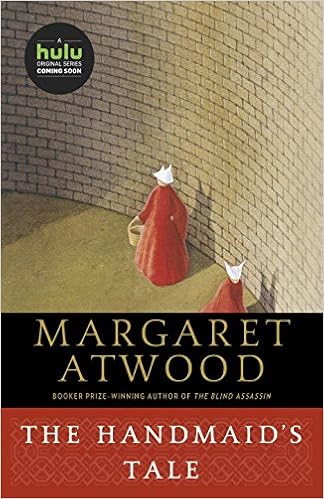
 The Red Clocks is The Handmaid’s Tale for a new generation. Four women in a small Oregon town struggle with new laws that grant personhood to embryos and make IVF and abortions illegal. Ro is a single woman in her forties desperately trying to get pregnant. Susan is an unhappy housewife and mother. Mattie, one of Ro’s best students, is facing an unwanted pregnancy. Their lives intersect when Gin, a reclusive homeopath with connections to all three, is arrested. The Red Clocks is an audacious and unapologetic cautionary tale. Megan
![The Power of Habit: Why We Do What We Do in Life and Business by [Duhigg, Charles]](https://images-na.ssl-images-amazon.com/images/I/51Q4AwpPDkL.jpg)
![The Wisdom of Sundays: Life-Changing Insights from Super Soul Conversations by [Winfrey, Oprah]](https://images-na.ssl-images-amazon.com/images/I/51Yt1NrsfbL.jpg)


 An
An 
 Smoketown : the untold story of the other great Black Renaissance
 I am not your Negro
 American
 Against the odds the artists of the Harlem Renaissance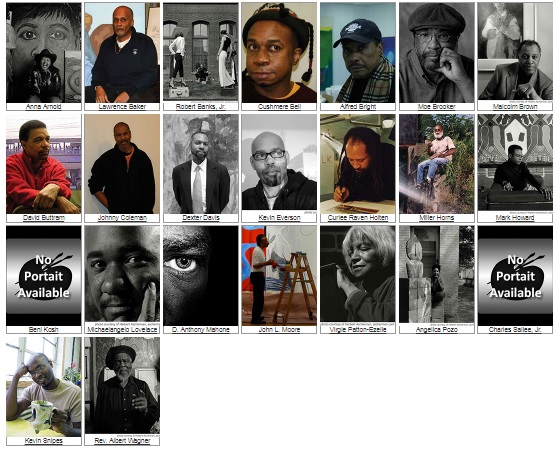




 Read it or Weep