By Alyssa Nicole
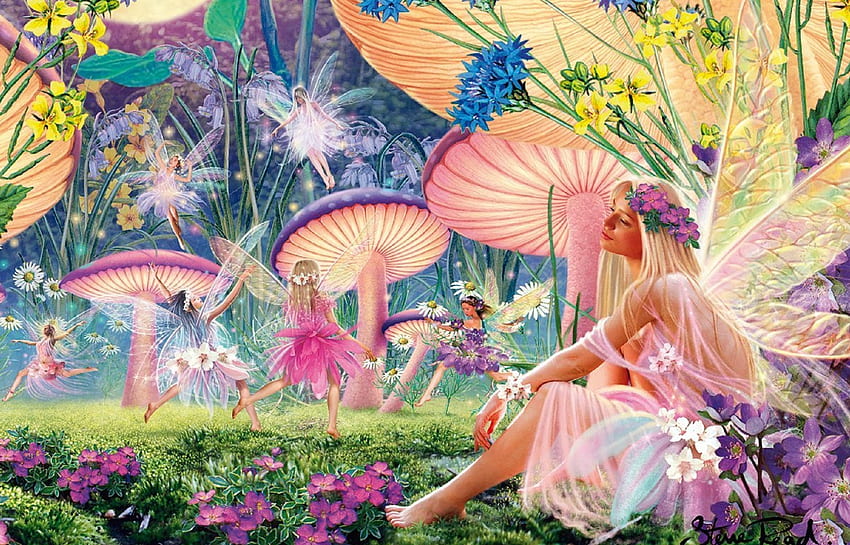
May finally approaches, the golden days are slow and sweet like dripping honey. My husband and I, like many people, are preparing our yard for the warmer weeks ahead. The most recent addition to our little piece of the world is a fairy garden. It is a quaint little village on the path leading to our porch, with a tiny toadstool, a miniature moss-enrobed bench, a graceful fairy, a portly gnome and a little garden door that looks as though it’s a liminal space between our world and the realm of the fae. Naturally, this little project has intrigued me to check out books on fairies in the literary world.
For those interested in etymology, the word “fairy” is derived from “fata” in Latin, translating to goddess of fate. In Old French, “faerie” means enchantment. Fairies are often portrayed as mischievous, clever, whimsical, and sometimes shy. Upon pouring over stories featuring some of the most famous fairies born from ink and paper, I have discovered a wide variety of personalities that both corroborate and deviate from the fairy archetype.
Tinkerbell is Peter Pan’s most loyal companion and perhaps the most-well known literary fairy to young and old. She was born, like all fairies in this story, from a baby’s first laugh. As wholesome as this sounds, Tinkerbell is no angel. She is quite conceited, jealous and has a tremendous temper that far exceeds her petite frame. It is said that fairies, or at least fairies in J.M Barrie’s universe, are so small they can only be one thing at a time. So when Tinkerbell is bad, she is all bad with no room for goodness and vis versa. She often uses her cunning and cleverness to try to get rid of Wendy for good, wanting no female getting in the way of her Peter Pan.
Puck, the mischievous mis-matchmaker from Midsummer Night’s Dream, is suitably named. For the word puckish is defined as “playful, especially in a mischievous way.” He lives up to his moniker by ensorcelling two men to fall in love with the same woman, wreaking havoc amidst the couples. Titania, the fairy queen, is fierce and intransigent, refusing to submit to her husband’s demands for her to give up her changeling child. It is mischievous Puck, once again, who causes trouble when he brews up a concoction that makes Titania fall in love with a donkey. A cruel, albeit temporary, punishment devised by her husband. Titania is concerned about the impact their quarrels are having on the environment, showing solicitude for the world around them.
In Susanna Clarke’s Jonathon Strange and Mr. Norrell, a nameless fairy known as “The Gentlemen with The Thistledown Hair” is perhaps the most wicked of the fairies on this list, tricking a man bargaining for his wife’s resurrection after her death. He agrees to let her husband keep her for half of her life and claims that he will get the other half. The catch is that he splits her life in such a way that she is constantly caught between two worlds: the mortal realm and the fairy realm. There are times when her body is there, but her soul is trapped in the Otherworld.
The fairies in at least some of the classic fairytales tend to be more magnanimous, granters of wishes and dreams. The fairy godmother in Cinderella is not your typical tiny sprite. She is a being of benevolence and kindness rather than trickery and impishness. Six of the seven fairies in Sleeping Beauty gift the infant Princess Aurora with intangible yet wonderful presents: that she would be the loveliest person in the world, cleverness of an angel, grace in all she did, she would dance to perfection; sing like a nightingale and would play beautiful music on all kinds of instruments. The seventh, of course, is one of the most famous female villains of all time and is a bitter and vengeful fairy who curses the young princess to prick her finger on a spinning wheel and fall into an eternal slumber.
Greek mythology, nymphs are very similar to fairies. They have more human-like qualities and are further broken down into the natural realm in which they dwell. These include, but are not at all limited
to dryads (tree nymphs), naiads (fresh water nymphs) anthousai (flower nymphs) aurai (breeze nymphs) and asteria (nymphs who dance among the stars.) A famous nymph from Greek mythology, is Oenone. She was a naiad and jilted wife of Paris. Her mortal husband leaves her for a woman if immortal beauty, the famous Helen of Troy. In Margaret George’s retelling of the story, Oenone rejects Helen’s pleas to heal Paris after he is fatally wounded in the Trojan War.
Oddly, fairies do not play an important role in the very popular fantasy series, Harry Potter. Here are loosely referenced as being very vain creatures, humanlike with insect wings. They often allow humans to use them as decorations. Pixies, however, make an appearance in the Chamber of Secrets book. They are blue with large ears and beady eyes, mischief-makers of prodigious strength.
Fairy lore is varied and fascinating. If you are interested in learning more about the various types of fairies and their magical symbolism, I highly recommend “Fairy Magick” by Aurora Kane. She delves into various types of fairies, lore, and ways to immerse yourself in the mystical realm of these fantastical creatures.
“All you need is faith, trust, and a little bit of pixie dust!” -Peter Pan







 Read it or Weep