Thoughts About Reading and Interpretation

Kabbalah

So, lately I’ve been thinking about reading, and also interpretation.  I think the two definitely go together, because when we read (whether it’s a book, another person, or a situation), we automatically interpret – the two go hand in hand.  To read is to interpret.  That’s why I really resonate with the idea that when we are happy, we see a happy world, just as when we are sad, we see a sad world.  I understand that to mean that the world we see is a reflection of how we think.  In other words, when we are happy, the world is happy, because that is the psychological framework from which we are interpreting.  When we are sad, the world is sad, because our interpretation has shifted, and now we are seeing the world that way instead.  This is, I believe, a core idea of Cognitive Behavioral Therapy, i.e. there is a massive and strong connection between how we think about ourselves and how we see the world.  If we are peaceful, I think we see a peaceful world, or at least understand the terror of this world to come from a place of fear instead of love.  But if we are not feeling peaceful, our attention zeroes in on situations that are not peaceful, and we interpret them as evidence that the world is full of suffering, say, or that the universe is a hostile and fearful place, instead of a place capable of immense love.

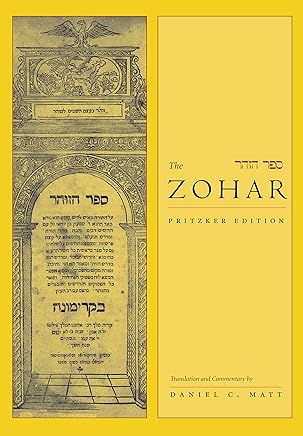
I was thinking about these ideas because I have lately been reading two books related to  Jewish mysticism – Kabbalah by Gershom Scholem, and The Pritzker Zohar translated by Daniel Matt – and reading these books has me thinking about how powerful interpretation really is.  For the Jewish mystics approached the Hebrew Bible (the Five Books of Moses, Prophets and Writings) from a totally different perspective from conventional religion.  The mystics believed that the Hebrew Bible contained secrets about the universe, the self, the creation of the universe, and/but these secrets were only available to a particular form or mode of interpretation.  Another way of saying this is that the Hebrew Bible reflected back to its readers what the readers brought to it.  If the reader came to the Bible in search of compelling narratives about people that still applies today, that’s what they would find.  If they wanted to find literal answers in a fundamentalist vein, that’s what they’d find.  And if they interpreted the text anagogically, then they would find spiritual truths that were universal and applicable in many ages.

I think this is why I love reading so much.  Reading is in many ways a training of, an apprenticeship to, new ways of interpretation.  When we wrestle with a text, when we expand our vocabulary, when we open our mind to new interpretations, then we are really, in the words of the literary critic Harold Bloom, “augmenting our self.”  We are then growing, mentally, emotionally, spiritually, because we are acknowledging that we don’t know everything, that it is possible that the next day might just bring a book that will change our lives forever.  I think that’s how the mystics read the Hebrew Bible – as a text that was so utterly rich and alive and fascinating, booming and shaking with meaning, that each letter in the Hebrew Bible carries an immense weight of meaning.  They read it as essentially a perfect book that breathed new life into its reader.  This is, like most things, a way of reading and interpreting that is new to me, and I think it is worth taking seriously.

The Zohar: Pritzker Edition, Vol. 1


Winter Reading Bingo – Books by Authors of Color

I’m glad I’m able to share with you some authors of color, since it is Black History Month.  However, let’s not limit our authors to African-American writers.  Let’s focus on people of color more broadly.  Here are a few:

James Baldwin, Early Novels & Stories, and Collected Essays.

Cover image for     Cover image for

Image result for james baldwin

Jhumpa Lahiri, In Other Words and Interpreter of Maladies

Cover image for   Cover image for

Image result for jhumpa lahiri

Tommy Orange, There There

Cover image for

Image result for tommy orange

Rita Dove, Selected Poems

Cover image for

Image result for rita dove


New Fiction Roundup – February 2019

Here are some new great titles in fiction to browse!  Click on the title, and this will take you to the catalog.

Cover image for Cover image for Cover image for

Where Reasons End by Yiyun Li – The award-winning author of Kinder Than Solitude draws on her experiences of losing a child to suicide in a poignant tribute to the love and complexities of parent-child bonds that reimagines an urgent conversation between a mother and teenage son.

The Curiosities by Susan Gloss – As she tries to have a baby with her husband, Nell Parker takes command of an art colony full of eccentrics.

Good Riddance by Elinor Lipman – Discarding her late mother’s cherished and heavily annotated high school yearbook, Daphne is entangled in a series of absurdities when the yearbook is discovered by a busybody documentary filmmaker.

Cover image for Cover image for Cover image for

Goulash by Brian Kimberling – Escaping small-town life to immerse himself in the rapidly changing culture of 1998 Prague, Elliott falls in love with an English teacher with whom he explores their adopted city’s wonders before historical events upend their idyllic existence.

That Time I Loved You: Stories by Carrianne Leung – A U.S. debut by the author of The Wondrous Woo finds the residents of a new subdivision in 1970s Toronto torn by a rash of suicides that are linked to dark undercurrents of infidelity, racism and hidden abuse.

This Is Not A Love Song: Stories by Brendan Matthews – A first collection by the author of The World of Tomorrow includes the stories, “My Last Attempt to Explain to You What Happened with the Lion Tamer” and “Airborne.”


New Non-Fiction Roundup – February 2019

Here are some new exciting titles coming in February!  Click on the title to find the book in the catalog and place a hold.

Cover image for Cover image for Cover image for

The Source of Self-Regard: Selected Essays, Speeches, and Meditations by Toni Morrison – An anthology of the Nobel Prize-winning writer’s essays, speeches and commentary on society, culture and art includes her powerful prayer for the dead of 9/11, her searching meditation on Martin Luther King, Jr. and her poignant eulogy for James Baldwin.

This View of Life: Completing the Darwinian Revolution by David Sloan Wilson – The distinguished evolutionary biologist and author of Evolution for Everyone builds on decades of research to outline a paradigm-changing new approach to the applications of evolutionary theory in today’s social and cultural institutions.

How to Disappear: Notes on Invisibility in a Time of Transparency by Akiko Busch – The author of Nine Ways to Cross a River explores the idea of invisibility in nature, art and science as part of the search for a more joyful and peaceful way of life in today’s increasingly surveilled and publicity-obsessed world.

Cover image for Cover image for Cover image for

Liquid Rules: The Delightful and Dangerous Substances that Flow Through Our Lives by Mark Miodownik – The New York Times best-selling author of Stuff Matters shows readers the secret lives of liquids: the shadow counterpart of our solid “stuff.”

Brown White Black: An American Family at the Intersection of Race, Gender, Sexuality, and Religion by Nishta J. Mehra – An essay collection by the Blue Jean Gourmet blogger describes how her experiences as an Indian-American, the wife of a white Christian woman and the mother of an adopted black son have been challenged by rigid cultural family norms.

I.M.: A Memoir by Isaac Mizrahi – A memoir by the multifaceted pop culture icon includes coverage of his experiences as a gay youth in a Syrian Jewish Orthodox family, his education at LaGuardia High School for Performing Arts and the making of his documentary, Unzipped.


Winter Reading Bingo: Spotlight on Local Authors

So, as readers of Read it or Weep have come to learn, we are playing Winter Reading Bingo here at Rocky River Public Library.  Earn a bingo square by completing the (fun and edifying) task.  One of the bingo squares, which I”ll focus on in the blog post, is to read a local author.  But which local author, you say?

With so many wonderful Ohio authors to choose from, here are a few to get you started.

Image result for toni morrison

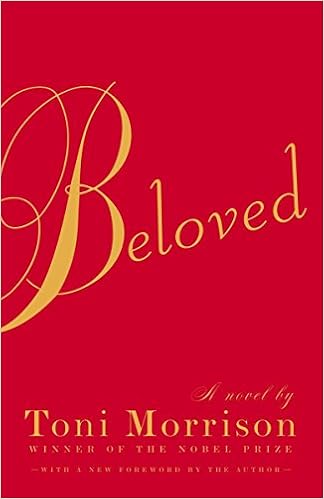
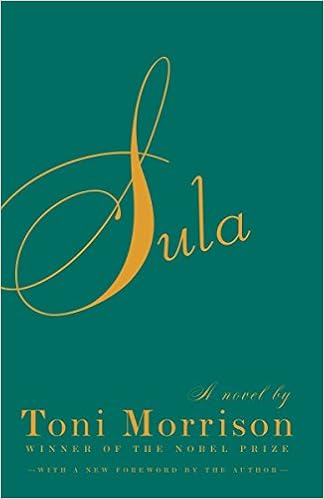
Three novels by Toni Morrison (click on the book to take you to the catalog):

Image result for toni morrison belovedImage result for toni morrison bluest eyeImage result for toni morrison sula

Image result for James Wright poet

Collected Poems by James Wright, newly acquired by RRPL:

Cover image for

Image result for dawn powell

Two collections of novels by Dawn Powell (you could read just one novel in the book – each book has a few novels by her):

Cover image for              Cover image for

Some links to Ohio authors:

Ohio Authors

https://en.wikipedia.org/wiki/Category:Writers_from_Ohio

http://www.orrt.org/authors/

https://www.goodreads.com/shelf/show/ohio-authors

https://www.goodreads.com/list/show/31954.Ohio_Authors


Andrew’s Top 10 Books (and Top Five Movies) for 2018

If there was any theme to my own reading this year, it was learning more about the pleasures of taking on challenging (and long!) books.  As the cliche often points out, we really do live in an age of distraction.  Social media is always clamoring for attention, as is the constant news cycle, streaming t.v…….etc.  For that reason, it was such a pleasure to return again and again to one of our oldest technologies (the book), and, without distraction, really focus on and immerse myself in a long narrative, a long work of social science, a long work of history.  It was a lesson in pleasurable perseverance, and an attempt to act somehow in accordance with the values of lifelong learning, which is one of the values I believe our public libraries contribute to.  Reading is one of the primary ways that we remain lifelong learners.  This year, I worked hard to live up to my own readerly expectations, and stay a lifelong learner for as long as I can.

  1. War and Peace by Leo Tolstoy

Cover image for

Probably my favorite book ever, by one of my favorite writers ever.  Tolstoy has an uncanny power of representing reality, and it’s unlike any writer I”ve ever come across.  There seem to be no false steps (even if you count his rants about history, which I found mostly fascinating).  Everything for the most part feels as natural and organic as the real texture of lived life.  Tolstoy also, for lack of a better word, seems wise and compassionate to me, at least in some of his fiction, and his knowledge of his characters’ inner lives is nonpareil.  This is the most immersive reading experience I’ve ever had or known (with the possible exception of reading as a child).  Worth as much time as it takes.

2.  The Assistant by Bernard Malamud
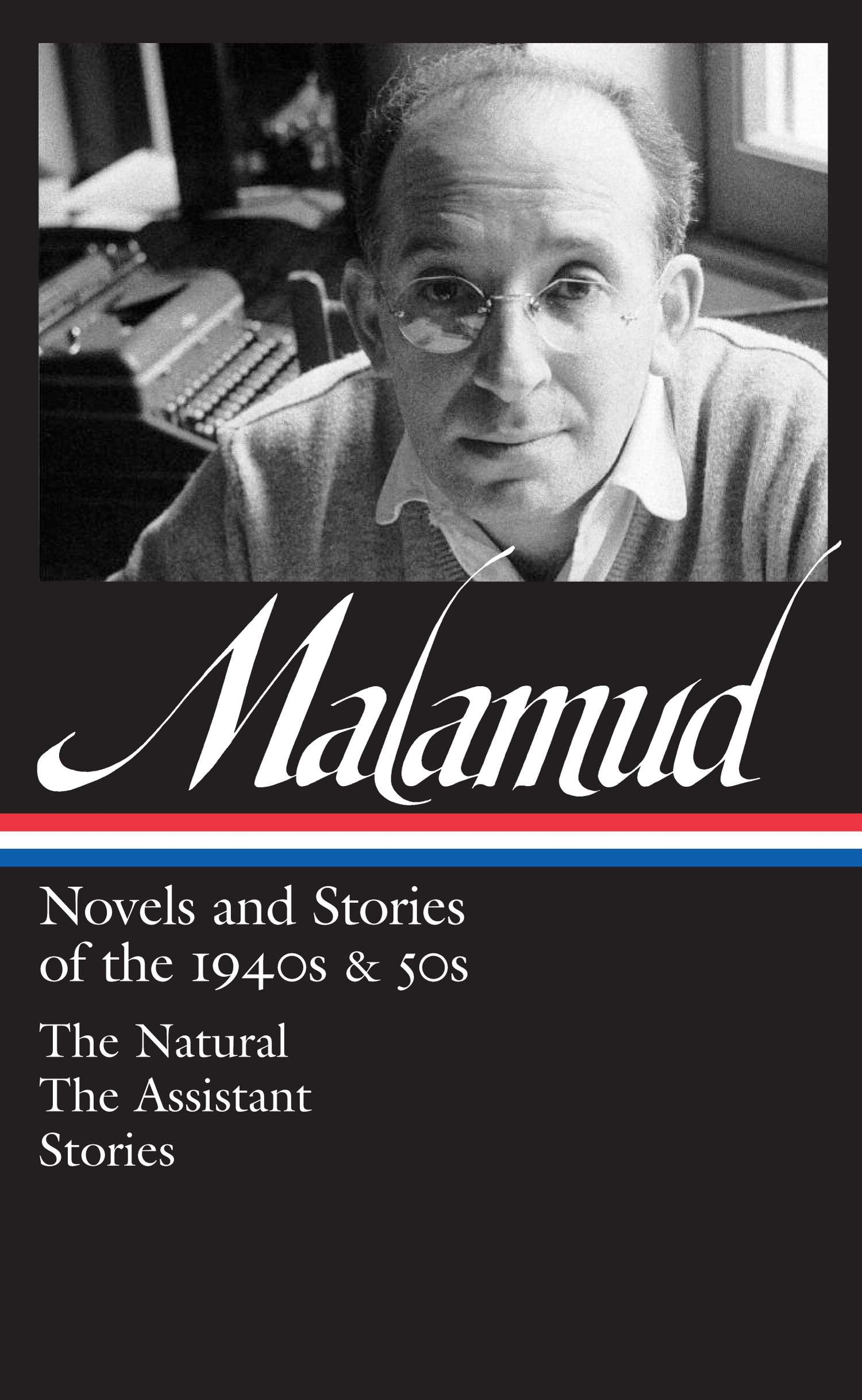
Image result for assistant malamud

Someone once compared Malamud’s writing to Chopin’s nocturnes.  I”ve always liked the comparison.  Both create subtle, moving, lyrical compositions with emotional depth.  It’s also interesting to compare him to (who else) Tolstoy, since Tolstoy in War and Peace writes on a grand and minute scale, from the immensity of battlefields to the tiny alterations of the heart, while Malamud in The Assistant writes on a much smaller scale, focusing here on the claustrophobic setting of an elderly Jewish man’s grocery stores in Brooklyn in the 1950’s, and the relationship between the grocer’s daughter and an assistant in the shop.  (If you want a more expansive Malamud, especially on the wonders of nature, check out A New Life.)  But the fact that Malamud writes on a smaller scale doesn’t really matter.  The Assistant is a rich and complex and wonderful novel, with characters who feel real, who you come to care about.  Malamud writes with subtlety, creativity and intelligence.  Actually, this year I decided to read everything Malamud wrote, because I loved The Assistant so much, and have always loved his short stories.  Although I didn’t quite succeed in my goal, I still read four of his novels and many of his exquisite short stories.  And I came away from the project the same way I came away from The Assistant – grateful that we have a Malamud we can return to, who brings to vivid life the lives of postwar American Jewry.

3.  Thinking, Fast and Slow by Daniel Kahneman
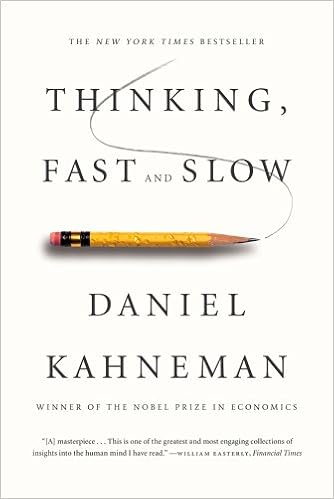
Here is my short blog post about the book, which I wrote for RRPL’s blog, “Read it or Weep.”

4.   The Righteous Mind: Why Good People are Divided by Politics and Religion by Jonathan Haidt
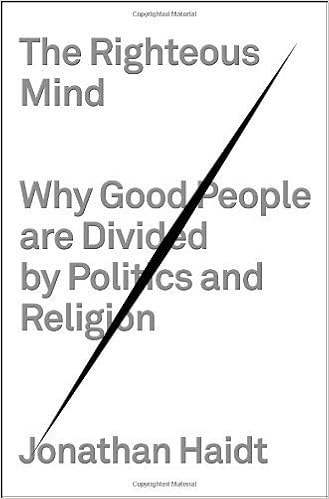
It’s hard (unethical?) to avoid politics.  This was my this-year’s reader’s foray into more political content, as opposed to getting all my political content from social media or magazines.  (I think we should all read more books about politics, and thereby receive more sustained treatments of topics that normally are given bite-size clickbait attention.)  Haidt is the co-author of the recent The Coddling of the American Mind: How Good Intentions and Bad Ideas are Setting Up a Generation for Failure; he’s also a professor at New York University and founder of Heterodox Academy, an organization that encourages political diversity and constructive disagreement on college campuses.  I found The Righteous Mind utterly fascinating.  Haidt does a great job of talking about how moral decisions (like who to vote for) are first-off intuitive, and then we develop our reasoning to support those decisions. This is a pretty interesting claim.  I also found his Moral Foundations Theory interesting – he claims, based on a lot of studies, that there are six foundations of morality, which are care/harm, liberty/oppression, fairness/cheating, loyalty/betrayal, authority/subversion, and sanctity/degradation. He then argues, again based on a lot of studies, that liberals are primarily concerned with the first three (with the majority of liberals caring most about caring for others and avoiding harming others), libertarians are concerned with primarily with liberty/oppression (liberty from oppressive governance), and that conservatives are concerned with all six foundations to varying degrees (sanctity, for example, explaning the many religious people on the right).  The important point is that each political persuasion, according to Haidt, has a different moral psychology.  I found this to be a helpful conclusion for explaining some political differences.  There was also really interesting stuff about how religion can build strong moral communities, which Haidt uses to argue against the more vocal atheists in the intellectual community.

5. Anna Karenina in Our Time: Seeing More Wisely by Gary Saul Morson

"Anna Karenina" in Our Time: Seeing More Wisely

This was a lucid and penetrating study of Tolstoy’s Anna Karenina, and it changed my thinking about many things, above all how we are supposed to think about Anna and her fate. In Morson’s view, Anna is not the incarnation of love and too alive for this world, but is instead constantly misperceiving things and full of self-deceit. It is the result of these misperceptions – what Morson frames as Tolstoy’s interest in “tiny, tiny alterations of consciousness” – that ultimately lead to her tragic end. There is also a great chapter on Levin, my favorite character in Anna Karenina, and the book ends with some very interesting “Tolstoyan propositions” that Morson culls from Tolstoy’s body of work. A really smart and helpful work of literary criticism.

6. Prophecy and Politics: Socialism, Nationalism and the Russian Jews, 1862-1917 by Jonathan Frankel

Prophecy and Politics: Socialism, Nationalism, and the Russian Jews, 1862-1917

Okay, hear me out.  Why would I (absurdly?) recommend a 700-page tome in small font about Jewish life and culture and politics in Russia, Palestine, and America? As someone who struggles with reading history, I can only answer that this book has been, for me, a kind of antidote to distraction, something that I had to work with and through, but always with pleasure and learning.  I’m about two-thirds of the way through, and I’ve learned a lot about the pleasures of reading a more challenging or difficult historical text.  I’ve also, of course, learned a great deal about the politics that informed and provided a framework for the founding of Israel, and that also led to the great migrations of East European Jews to America in the 1880’s, as well as the smaller migrations to Palestine.  If these are topics that interest you, I cannot recommend this book highly enough.  It is a comprehensive look, through all the lectures and pamphlets and debates and congresses of the time, at Russian Jewry during the highly tumultuous period that included two Russian revolutions, terrifying pogroms, intense idealism, and intense despair.  We meet many fascinating characters along the way, and we also get a strong taste of the time-periods under scrutiny.  This is an amazingly researched and written book.

7. Strangers in the Land: Blacks, Jews, Post-Holocaust America by Eric J. Sundquist

Strangers in the Land: Blacks, Jews, Post-Holocaust America

A magisterial and seemingly comprehensive cultural history of Black-Jewish relations in 20th century America, this book looks at law, literature, sociology, political science, and history, in order to understand the very complicated and intertwined histories of these two historically marginalized groups.  It is a somewhat disheartening read as well, as the Civil Right era in the 1960’s –  when Jews and African Americans built a strong coalition, as symbolized by Martin Luther King Jr. marching with Rabbi Abraham Heschel – leads into later decades that included intense antagonism and mutual misunderstandings.  Still, it is a fascinating look at race, ethnicity, religion and culture, and Sundquist is such an incredible reader.  A more academic book that deserves slow reading, but worth the time, the book provides helpful insights into how the Holocaust and slavery have been represented in the broader culture, as well as giving us a fascinating and brilliant chapter on the myriad legal and cultural contexts that inform To Kill a Mockingbird.

8.  Growing Up Ethnic: Nationalism and the Bildungsroman in African-American and Jewish-American Fiction by Martin Japtok
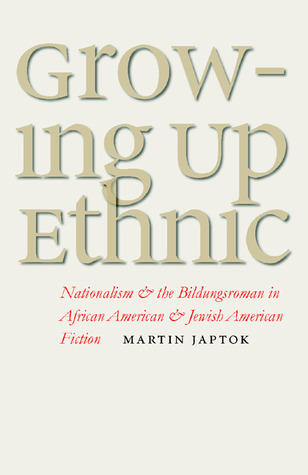
Growing Up Ethnic: Nationalism and the Bildungsroman in African American and Jewish American Fiction

“Bildungsroman” is a fancy German word for a coming-of-age tale.  This book looks at three pairs of Bildungsroman by Jewish-American and African-American novelists in the early 20th century.  There is a great introduction, which wrestles with the concept of ethnicity, and a really fascinating conclusion, that looks at the role novels plays in nation-building.  There’s also great stuff between the intro and conclusion, about works by six authors, five of whom I had never heard of.  It was so interesting to learn about these early 20th century novels, and the way in which they represent ethnicity as cultural and biological.  There are very compelling discussions of how the novels in question view Jewishness and Blackness as containing certain qualities, while also arguing that Jewishness and Blackness are constructed.  A more academic, but still wonderful book that introduced me to new writers.

9.  The Great Shift: Encountering God in Biblical Times by James L. Kugel

The Great Shift: Encountering God in Biblical Times

This book asks the radical and fascinating question, how did people actually experience/perceive/encounter God in Biblical times, and how has this notion of God changed over time?  Kugel is a very gifted communicator of complicated ideas, and I found this dive into religion, theology and Biblical history to be remarkably original and interesting.

10.  The New Negro: the Life of Alain Locke by Jeffrey C. Stewart
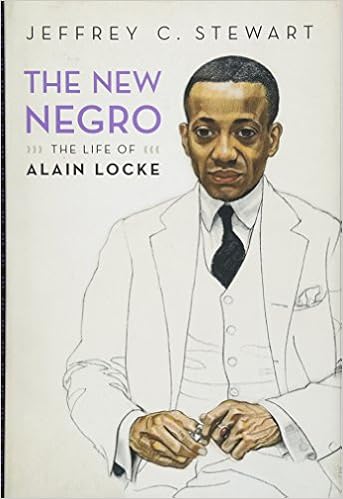
This might be too premature, because I am less than a third through this book, but what I’ve read so far has been great.  Stewart, Locke’s biographer, won the National Book Award for Nonfiction this year for this biography of Alaine Locke, one of the primary founders and shapers of the Harlem Renaissance.  Locke was a Black gay man at a time in the early 20th century when it was dangerous to be Black or gay, not to mention both.  He was also brilliant, and helped shape African-American, not to mention American, culture.  This book reads like a fantastic novel, and I can’t put it down.

Top Five Films

  1. The Florida Project,” directed by Sean Baker
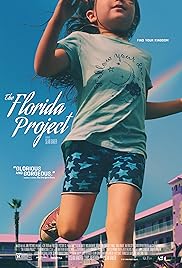
The Florida Project Poster

2. “The Virgin Spring,” directed by Ingmar Bergman

The Virgin Spring Poster

Breaking the Waves,” directed by Lars Von Trier
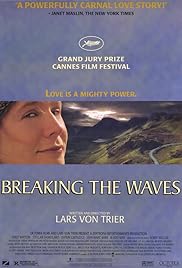
Breaking the Waves Poster

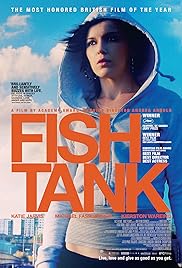
Fish Tank,” directed by Andrea Arnold

Fish Tank Poster

Far From Heaven,” directed by Todd Haynes
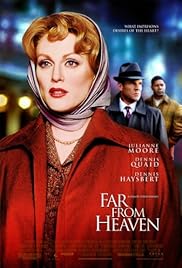
Far from Heaven Poster

New Non-Fiction Roundup – December 2018

Cover image for Cover image for Cover image for

The Future of Capitalism by Paul Collier – From world-renowned economist Paul Collier, a candid diagnosis of the failures of capitalism and a pragmatic and realistic vision for how we can repair it.

The Secret Ingredient: Recipes for Success in Business and Life by Gigi Butler – Gigi Butler of Gigi’s Cupcakes shares her personal success story, her hard-won business acumen, and the life-changing inspiration that she’s gained from a challenging life. Each chapter includes a delicious dessert recipe for cupcakes and more!

A Call for Revolution: A Vision for the Future by Dalai Lama – This eloquent, urgent manifesto is possibly the most important message the Dalai Lama can give us about the future of our world. It’s his rallying cry, full of solutions for our chaotic, aggressive, divided times: no less than a call for revolution.

Cover image for Cover image for Cover image for

Fed Up: Emotional Labor, Women, and the Way Forward by Gemma Hartley – Asserts that carrying the thankless day-to-day anticipating of needs and solving of problems large and small is adversely affecting women’s lives and feeding gender inequality, and shows the way forward for better balancing their lives.

Am I Dying?! A Complete Guide to Your Symptoms – and What to do Next by Christopher Kelly and Marc Eisenberg – A comprehensive, light-hearted resource for the hypochondriac in all of us, from two Columbia University cardiologists who review dozens of symptoms and offer advice on when to chill out, make a doctor’s appointment, or go to the hospital.

God in the Qur’an by Jack Miles – From the Pulitzer Prize-winning author of God: A Biography , an erudite, hugely informative portrait of the God of Islam, the world’s second largest, fastest-growing, and perhaps most tragically misunderstood religion.


New Fiction Roundup – December 2018

Cover image for Cover image for Cover image for

North of Dawn by Nuruddin Farah – A Somalian couple’s tranquil life abroad in Oslo is irrevocably transformed by the arrival of their jihadist son’s widow and children, who respectively retreat into strict religion and hunger for freedoms in a new homeland.

Radiant Shimmering Light by Sarah Selecky – Working to establish herself online as a pet aura portrait artist, Lilian reconnects with her cousin, the famed head of a feminine lifestyle empowerment brand whose seemingly successful makeover program transforms Lilian’s perspectives about authenticity versus marketing magic.

Tiamat’s Wrath by James S. A. Corey – The eighth novel in James S. A. Corey’s New York Times bestselling Expanse series– which is now a major television series.  Thirteen hundred gates have opened to solar systems around the galaxy. But as humanity builds its interstellar empire in the alien ruins, the mysteries and threats grow deeper.

Cover image for Cover image for Cover image for

The Mansion by Ezekiel Boone – In this white-knuckle thriller from the internationally bestselling author of The Hatching series, a family moves into a home equipped with the world’s most intelligent, cutting-edge, and intuitive computer ever–but a buried secret leads to terrifying and catastrophic consequences.

The Dakota Winters by Tom Barbash – An evocative and wildly absorbing novel about the Winters, a family living in New York City’s famed Dakota apartment building in the year leading up to John Lennon’s assassination.

The Boy by Tami Hoag – An unfathomable loss or an unthinkable crime? #1 New York Times bestselling author Tami Hoag keeps you guessing in her most harrowing thriller yet.

Cover image for Cover image for Cover image for

Of Blood and Bone by Nora Roberts – Nora Roberts, the #1 New York Times bestselling author of the epic Year One returns with Of Blood and Bone, a new tale of terror and magick in a brand new world.  They look like an everyday family living an ordinary life. But beyond the edges of this peaceful farm, unimaginable forces of light and dark have been unleashed.

Pandemic by Robin Cook – New York Times-bestselling author Robin Cook takes on the cutting-edge world of gene-modification in this pulse-pounding new medical thriller.

A Delicate Touch by Stuart Woods – Stone Barrington uncovers a societal minefield in the exhilarating new adventure from #1 New York Times-bestselling author Stuart Woods.


Elizabeth Bishop’s Poems at RRPL

Image result for elizabeth bishop

Some of the many pleasures of working as a librarian are ordering books (spending money on books – what could possibly be more fun or interesting or even challenging?), and then actually seeing the book once it has arrived, holding the book in your hand, and (lovingly) placing it on the new books shelf, where it will hopefully be swept up soon by an interested reader.  If you are a lover of books, and a believer in the value of reading, receiving an ordered book is kind of akin to actually handing a book to a patron who has been looking for that particular book.  Although it’s not the same exchange, both carry a suggestion of possibility – the possibility that this book will open new worlds, will utterly absorb the passionate reader, will even change the reader’s life.  Whether I am directly handing the book to a patron, or placing it on the shelf for a future patron, both allow me as a librarian to express in a quiet way my love for the act of reading.

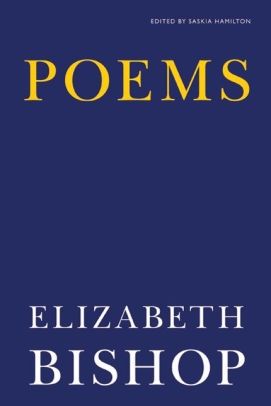
I say all this because today, one of my favorite books of all time came into the library this afternoon.  If you know me, you could probably guess that it’s a book of poetry – and it is.  The book is simply called “Poems,” but it is actually the collected poetry of Elizabeth Bishop, a 20th century American poet who was born in 1911 in Massachusetts and died in 1979, and wrote what I believe to be some of the best poems of the 20th century.

So why all the hyperbole?  What is so special about Bishop?  For me, there has always been something special about Bishop’s eye – her powers of description are so intense and unique and funny and interesting, and the details of her description often build in power, and end on just an amazing note.  Her poems are so artful, and they are also deeply intelligent.  It feels like she saw the world in such an interesting way, and then had the ability to translate this unique vision into language and poetry.

All of which is to say, that today, because the book came in (and I should say that it’s not a new book, but it is a book I believe our collection needed), I wanted to celebrate Elizabeth Bishop’s life and work by sharing a poem by her with you.  It was very hard to decide on which poem to share, but I thought the poem she wrote called, very simply, “Poem,” is a great place to start, a poem she wrote later in her life.  The poem is about a painting Bishop finds, or sees, or discovers anew.  Here it is:

Poem

About the size of an old-style dollar bill,
American or Canadian,
mostly the same whites, gray greens, and steel grays
– this little painting (a sketch for a larger one?)
has never earned any money in its life.
Useless and free, it has spent seventy years
as a minor family relic
handed along collaterally to owners
who looked at it sometimes, or didn’t bother to.

It must be Nova Scotia; only there
does one see gabled wooden houses
painted that awful shade of brown.
The other houses, the bits that show, are white.
Elm trees, low hills, a thin church steeple
– that gray-blue wisp – or is it?  In the foreground
a water meadow with some tiny cows,
two brushstrokes each, but confidently cows;
two minuscule white geese in the blue water,
back-to-back, feeding, and a slanting stick.
Up closer, a wild iris, white and yellow,
fresh-squiggled from the tube.
The air is fresh and cold; cold early spring
clear as gray glass; a half inch of blue sky
below the steel-gray storm clouds.
(They were the artist’s specialty.)
A specklike bird is flying to the left.
Or is it a flyspeck looking like a bird?

Heavens, I recognize the place, I know it!
It’s behind – I can almost remember the farmer’s name.
His barn backed on that meadow. There it is,
titanium white, one dab. The hint of steeple,
filaments of brush-hairs, barely there,
must be the Presbyterian church.
Would that be Miss Gillespie’s house?
Those particular geese and cows
are naturally before my time.

A sketch done in an hour, “in one breath,”
once taken from a trunk and handed over.
Would you like this? I’ll probably never
have room to hang these things again.
Your Uncle George, no, mine, my Uncle George,
he’d be your great-uncle, left them all with Mother
when he went back to England.
You know, he was quite famous, an R.A….

I never knew him. We both knew this place,
apparently, this literal small backwater,
looked at it long enough to memorize it,
our years apart. How strange. And it’s still loved,
or its memory is (it must have changed a lot).
Our visions coincided – “visions” is
too serious a word – our looks, two looks:
art “copying from life” and life itself,
life and the memory of it so compressed
they’ve turned into each other. Which is which?
Life and the memory of it cramped,
dim, on a piece of Bristol board,
dim, but how live, how touching in detail
-the little that we get for free,
the little of our earthly trust. Not much.
About the size of our abidance
along with theirs: the munching cows,
the iris, crisp and shivering, the water
still standing from spring freshets,
the yet-to-be-dismantled elms, the geese.

I have read this poem many times, and it still remains fresh, “crisp and shivering,” like the iris in the last stanza.  What is amazing to me about this poem is that no matter how many times you read it, the epiphany that is at the heart of the poem – the way in which the speaker of the poem gradually realizes that she recognizes the painted scene, and then is able to reflect really deeply but reticently about the meaning of such a scene – always feels surprising and spontaneous and real.  Somehow, Bishop was able to kind of encode a dawning realization into her language, and this realization always feels intensely significant.  What she is chronicling is in many ways a different way of seeing things, starting with the inherited painting, moving into the recognition of the scene painted, and ending with what the painting means to her.  And this is done so wonderfully, without too many linguistic pyrotechnics, humbly, in a kind of plain (deceivingly plain) language.  What a great poem.

If this poem captures your attention, and you are interested in reading more of Bishop’s poetry, please come to RRPL and check out the book!  Here is a link to put a hold on it.  Also, below are some resources to learn more about Bishop’s life and work.  She is a poet who rewards many rereadings.  With that said, Happy Reading!

Paris Review interview:

https://www.theparisreview.org/interviews/3229/elizabeth-bishop-the-art-of-poetry-no-27-elizabeth-bishop

New Yorker articles about her biography:

https://www.newyorker.com/magazine/2017/03/06/elizabeth-bishops-art-of-losing

https://www.newyorker.com/books/page-turner/elizabeth-bishop-and-alice-methfessel-one-art

Poetry Foundation Profile, with Poems:

https://www.poetryfoundation.org/poets/elizabeth-bishop#tab-poems


Poems

New Non-Fiction Roundup – November 2018

Cover image for Cover image for Cover image for

Living with the Gods: On Beliefs and Peoples by Neil MacGregor – An acclaimed art historian explores the connection between faith and society by tracing the paths that different communities took to understand and describe their place in the cosmic order and how these narratives eventually shaped societies.

Taking the Arrow Out of the Heart by Alice Walker – The award-winning author of The Color Purple returns with a collection of nearly 70 works of poetic free verse, presented in both English and Spanish, that focus on issues of love, hope and gratitude in our troubled times.

A Tale of Two Murders: Guilt, Innocence, and the Execution of Edith Thompson by Laura Thompson – Delves into the 1922 case of the Ilford murder, which resulted in the hanging death of the perpetrator, Freddy Bywaters, as well as the victim’s wife, who was guilty only of having a romantic relationship with the suspect.

Cover image for Cover image for Cover image for

Witness: Lessons from Elie Wiesel’s Classrom by Ariel Burger – A devoted protégé and friend of Elie Wiesel takes readers into the sacred space of Wiesel’s classroom, showing the Holocaust survivor and Nobel Peace Prize recipient not only as an extraordinary human being, but as a master teacher.

The Apprentice: Trump, Russia and the Subversion of American Democracy by Greg Miller – In a book based on hundreds of interviews with those within President Donald Trump’s inner circle, a two-time Pulitzer Prize-winning Washington Post reporter investigates the Kremlin’s covert attempt to help Trump win the presidency, Trump’s allegiance to Vladimir Putin and Robert Mueller’s investigation.

The End of the End of the Earth by Jonathan Franzen – A provocative new essay collection by the award-winning author of Freedom and The Corrections includes an exploration of his complex relationship with his uncle, an assessment of the global seabird crisis and his young adulthood in New York.

Cover image for Cover image for Cover image for

Why Religion? A Personal Story by Elaine Pagels – Why is religion still around in the twenty-first century? Why do so many still believe? And how do various traditions still shape the way people experience everything from sexuality to politics, whether they are religious or not? In Why Religion? Elaine Pagels looks to her own life to help address these questions.

Slowhand: The Life and Music of Eric Clapton – From the bestselling author of Shout!, comes the definitive biography of Eric Clapton, a Rock legend whose life story is as remarkable as his music, which transformed the sound of a generation.

Insane Mode: How Elon Musk’s Tesla Sparked an Electric Revolution to End the Age of Oil by Hamish McKenzie – Hamish McKenzie tells how a Silicon Valley start-up’s wild dream came true. Tesla is a car company that stood up against  not only the might of the government-backed Detroit car manufacturers, but also the massive power of Big Oil and its benefactors, the infamous Koch brothers.