A Beautiful Friendship

Published in 1977 and winner of the Newbery Award, Bridge to Terabithia by Katherine Paterson is simply a beautiful story that is told with a great deal of sensitivity which enables it to cover some tough subject matter. I love this book. Each year that I was a teacher I would read this book aloud to my 5th grade class. First and foremost Bridge to Terabithia is the story of the friendship that develops between 10-year-old Jess Aarons and 10-year-old Leslie Burke. Jess has lived in a small rural town all of his life. Leslie moves into the house that is the closest to Jess’s. She is a city girl, an only child, who is confident and comfortable in herself.  Leslie needs her inner strength because she doesn’t fit the community’s idea of what a girl should be and do.


Using her imagination Leslie begins to expand Jess’s world. Together they create the imaginary country of “Terabithia” in the nearby woods. The castle that they build is a refuge that gives them one place where the outside world of teachers, bullies, and families cannot reach them. Led by Leslie, their imaginations soar. They become each other’s best friend. (SPOILER ALERT!) While Jess is away on a rare Saturday outing to Washington, D.C., Leslie dies in an accident. Her death devastates Jess, but he knows that he can no longer go back to the Jess he was before Leslie came into his life. This wonderful book concludes with Jess realizing that he can take what he learned from Leslie and pass it on to others, starting with May Belle, his younger sister. She becomes the new queen of Terabithia.


Seeing the movie is not something I will ever be able to do, but the movie has made me hope that out there somewhere there may be a former student who will remember.

~Janet

To Kill a Mockingbird

to kill mockingbird

I’ve read To Kill a Mockingbird at least two times in print and seen the movie several times as well. Last year I listened to the newest audio book version read by Sissy Spacek. She brings a special talent to this book, and the audio book won the 2007 Audie Award for Classics. The novel won the Pulitzer Prize, has been translated into more than forty languages, and has sold more than thirty million copies worldwide. Most recently, librarians across the country gave the book the highest of honors by voting it the best novel of the twentieth century.  It’s one of my favorite books. The book and movie blend together in my mind, and Atticus will always have the face of Gregory Peck. Scout, of course, is the  character I liked best, and she’s one spunky little girl, wearing overalls instead of dresses, and challenging the rules set forth by her aunt and housekeeper. When I was in  high school, the boys in my class were also taken with the novel, and gave the nickname “Boo” to one of the popular boys in the class.

It’s been challenged due to various reasons- use of the “N-word” and other objectionable words such as “damn” and “whore lady.” Most of the challenges are objections to its racial themes and objections by some back readers to the use of racial slurs. Despite the challenges, nearly fifty years after its publication, To Kill a Mockingbird continues to be read in schools and by people of all ages, and is viewed by critics as a novel of initiation and an indictment of racism.

~Ann

Montana 1948

I was surprised as well to find one of my very favorite books removed from a school reading list in Oklahoma.  Montana 1948 by Larry Watson was removed, according to the American Booksellers for Free Expression, for “profanity and descriptions of nudity and sex crimes.” Montana 1948 packs a quiet punch. It is a coming-of-age story in which 12-year-old David observes his parents trying to reconcile loyalty for family with the need for justice for those wronged.  David’s uncle, a revered doctor, has been accused of the sexual assaults of Native American women.  Author Larry Watson brings Montana and the 1940s to life with his beautiful writing.  Young David was forever changed by witnessing the moral courage of his parents. 

~Rosemary~

The Prometheus Awards

My husband is on the nominating committee for the Libertarian Futurist Society, which provides a literary award called the Prometheus Award, for science fiction which exemplifies libertarian thought. He’s been reading science fiction for months to find the best titles to nominate. Near the end of March the finalists were announced. Here is the press release: 

The Libertarian Futurist Society has announced finalists for this year’s Prometheus Awards, which will be presented during Anticipation, the 67th World Science Fiction Convention, August 6-10, 2009, in Montréal, Quebec, Canada.

The Prometheus finalists for Best Novel recognize pro-freedom novels published last year:
* Matter, by Iain Banks (Orbit Books) – Part of Banks’ series of far-future space operas about the Culture, a utopia which reflects Banks’ interest in anarchism through its avoidance of the use of force except when necessary for protection and defense. The novel focuses on an agent in Special Circumstances, the Culture’s special forces unit, who returns to her home planet, a “shellworld” with multiple layers of habitation, after her father has been killed in a coup.
* Little Brother, by Cory Doctorow  (TOR Books) –
A cautionary tale about a high-school student and his friends who are rounded up in the hysteria following a terrorist attack, the novel focuses on how people find the courage to respond to oppression.       
*The January Dancer, by Michael Flynn (TOR Books)-                                                                                                                                                                                                                                                                                                    The classic space opera, set in an interstellar civilization created by a wide-ranging human diaspora, revolves around how discovery of a an alien relic sends agents of a multisystem federation on a quest that exposes them to political and economic institutions of many different cultures and requires them to deal with threats to freedom, from piracy to political corruption.

* Saturn’s Children, by Charles Stross (Ace Books) –
A robot’s adventures after all the humans in a society have died raises complex issues of ethics, duty, family and struggle in this Heinlenesque novel.
* Opening Atlantis, by Harry Turtledove (Penguin/Roc Books) – Set in a world where medieval Europeans discover an island continent in the Atlantic Ocean, this first novel in a new atternate-history series explores the politics of colonization and the struggle for self-determination while offering parallels and contrasts with development of the Americas.
* Half a Crown, by Jo Walton (TOR Books) -The sequel to Walton’s Prometheus Award-winning Ha’penny concludes her alternative-history trilogy, set two decades after Britain reached accommodation with Hitler’s Germany in the 1940s, with a chilling portrait of people all too willing to trade freedom for security. 

In addition, there is an award for the Hall of Fame titles.

Here are the 2009 Prometheus finalists for Best Classic Fiction (Hall of Fame), a category that honors novels, novellas, stories, graphic novels, anthologies, films, TV shows/series, plays, poems, music recordings and other works of fiction first published or broadcast more than five years ago:
* Falling Free,a novel by Lois McMaster Bujold (1988);
* Courtship Rite,a novel by Donald M. Kingsbury (1982)
* “As Easy as A.B.C.,” a short story by Rudyard Kipling (1912)
* The Lord of the Rings, a three-volume novel by J. R. R. Tolkien (1955)
* The Once and Future King, including The Book of Merlyn, a novel by T. H. White (1977)
* The Golden Age, a novel by John C. Wright (2002). 

                                                                        ~Ann

Golden Anniversary

 elements-of-style1      

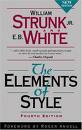
Happy 50th anniversary to Strunk & White!  The Elements of Style, first published in 1959, has sold more than 10 million copies worldwide.  A classic reference book, The Elements of Style has been considered a must-have for any student and conscientious writer. Combining composition skills with the study of literature, it gives the principal requirements of plain English style and concentrates attention on the rules of usage composition most commonly violated. 

~Evelyn


The Very Hungry Caterpillar

40anniversary_180x187

March 20th marks the 40th anniversary of Eric Carle’s beloved children’s picture book titled The Very Hungry Caterpillar, the colorful story of a caterpillar’s transformation into a butterfly.  On a recent interview with National Public Radio, Mr. Carle admitted that his fascination with color stems from a dark childhood in Nazi Germany. “During the war, there were no colors, no – there was no fashion. People didn’t have colorful scarves. Everything was gray and brown and the cities were all – (unintelligible) to houses were camouflaged with grays and greens and brown greens and gray greens or brown greens, and – there was no color. Then after the war, I became more familiar with abstract artists (ph) and especially the impressionists – color, color, color.”

The Very Hungry Caterpillar has sold more than

29 million copies

and has been translated into more than 47 languages.


Congratulations Mr. Carle!


~ Emma

Awards are Always Lovely

How happy, how lucky, how wonderful! A whole bunch of children’s book awards were recently announced at the American Library Association midwinter conference, and I do mean a whole bunch. The John Newbery Medal, Newbery Honor Books, Randolph Caldecott Medal, Caldecott Honor Books,  Coretta Scott King Book Award, Theodor Seuss Geisel Award, are just a few of the twenty-eight total categories. See? Whole bunch! Take at the whole list and see what you think. I know what I think already, I’m thinking this feels like a mini-reading challenge… Are you in?

—Stacey

In the shadow of greatness

The National Book Award winners for 2008 have been announced and tops of the fiction mountain is Peter Matthiessen for his book, Shadow Country

shadow-country

I say mountain because there were 271 fiction works submitted for consideration by the National Book Foundation for the award. Can you imagine reading 271 books in a year??

I realize the panelists aren’t reading all of them, but I’m still feeling woefully inadequate. I mean, I’m a lightweight when it comes to number of books consumed in general and specifically those considered to have literary merit.  I always make a New Year reader’s resolution to put more of the award-winning, critically acclaimed titles on my bedside table. Some actually do sit there. . . and sit there. . . and sit there. . .

Well, I guess I’ll just have to add Shadow Country  to my list. And Matthiessen’s previous National Book Award winner for non-fiction, The Snow Leopard.  And another finalist from 2003 that someone just told me I should read, The Devil in the White City  by Erik Larson. <sigh>

Maybe I’ll start working through the list of Caldecott winning books first. I’ve already read a couple of those. (Kitten’s First Full Moon – excellent! Make Way for Ducklings – loved it!!)

—Julie

Junot Diaz

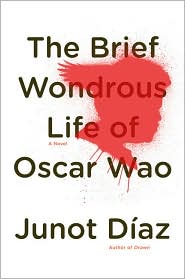
On Sunday, I went to the Cleveland Public Library’s Writers and Readers Series to hear Junot Diaz, author of the Pulitzer prize winning The Brief Wondrous Life of Oscar Wao. Diaz was funny, engaging and thoughtful and if you haven’t read the book, I highly recommend it. One thread of his discussion was about the role of post-memory in our lives and in his novel. Post-memory, according to Diaz, is how the memories of our parents and grandparents shape and transform our lives, though they are not our direct memories. In Oscar Wao’s case, his mother’s abuse at the hands of the Dominican dictator Rafael Trujillo resonates throughout her childrens’ lives.

One of the things I look for when choosing books to read are diverse settings and characters. It may sound simplistic, but reading books like this one help me to think outside my own experiences. Diaz singled out the National Book Critics Circle Award as nominating books that are representative of the diversity of American culture. Among books nominated in fiction this year are Diaz’s novel, Vikram Chandra’s Sacred Games, Hisham Matar’s In the Country of Men, Joyce Carol Oates’ The Gravedigger’s Daughter and Marianne Wiggins’ The Shadow Catcher. I, for one, am thrilled that more and more books offer up the whole of the American experience. What do you think?

~ Dori

To Read or Not to Read…

Thank you to my colleagues who have shared their book titles they are reading.  We all have different preferences when it comes to books. I tend to read books with “happy endings,” but I also like to be introduced to other types of books. Although I do read all genres of books from science fiction to fantasy to thrillers to romance to historical fiction as long as they have a “happy” ending or at least a “satisfying” ending, I’m ecstatic and content.  I don’t want everyone killed. I want GOOD to triumph over evil and I want people to live happily ever after. I will confess that I even  read the ending first before I start a book. I would have never read Harry Potter and the Deathly Hallows if Harry Potter had died at the end.  I was very interested in Ann’s review of Dewey: A Small-Town Library Cat Who Touched the World. It sounds like a wonderful book and one that I can recommend to others but it is one that I will never read because I never, never, ever, read ANIMAL books. I cry. Ever since I sobbed my way through Charlotte’s Web, I haven’t touched another book with an animal on a cover. There are too many other books out in the wonderful world of Bookland to read, so I will let others read those ANIMAL books and I will stick to my “happy” endings. Hey, it doesn’t matter what you read but that you READ so Happy Reading!                                                                                      ~Donna

“If you want a happy ending, that depends, of course, on where you stop your story.”
Orson Welles