What’s So Scary About Letting Me Pick My Own Books?

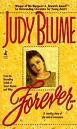
Now I am An Adult and I get to choose whatever I want when I see all those interesting looking books on the shelf! But honestly? My Mom was extremely open-minded and never, ever told me that any book was off-limits or inappropriate. She had lots of great qualities but this is one of the things that I think made her an Outstanding Parent, that she was let me read whatever and whenever I wanted. In fact, I was one of those kids other parents might have been annoyed with after sharing my copy of Forever by Judy Blume… Oh, well. Still not sorry about that other kids’ parents! But this also part of my point. If reading this book is supposed to lead kids astray, then how do you explain so many kids in one community reading this radical book but – to the best of my knowledge – none of us became troubled teens? It can be such a relief to read a book to gain knowledge through your own life experience or, even more importantly, so that you know you are not alone in that experience.

All of this is leading up to what inspired me to write about this topic today. Speak by Laurie Halse Anderson is an incredible book and should be read both boy and girl teens, along with the adult in their lives, so that a tough topic can be approached with a common understanding. I was talking about this book with a High School Librarian who said the small book discussion that took place after the teens read Speak was one of the most thoughtful and thought-provoking discussions she’d ever heard. What a gift that is! But this book is regularly challenged and the most current attack on this book strikes me as particularly harsh. A man in Missouri is trying to label Speak as “soft pornography” and nothing could be further from the truth. Ms. Anderson posted a response on her blog with links to the opinion piece he submitted to his local newspaper and links to four different avenues of response, if you should choose to get involved.

Doesn’t this seem very un-American, attempting to limit access to information and trying to prevent other people from making their own decisions about what to read? I think so, but I’m also willing to let you come to your own conclusions. If you *are* a fan of the First Amendment, if you believe books should never be banned because they make you think or feel something unfamiliar or uncomfortable, please join me in reading a banned or challenged book this week! Okay? Okay!

— Stacey
Latest Additions (but not really)

This week I need to bump our regularly scheduled Latest Additions posting so that I can rave and rage a little bit. First I need to rave! Megan and I were lucky enough to catch Michael Grant at Joseph-Beth Booksellers in Legacy Village last Wednesday… it was an awesome experience!! Mr. Grant was incredibly good-natured about the small turnout and sat down with four of groupies to chat. So. Much. Fun! We got to ask some questions about his writing, the Gone series, his new series, and stuff in general, here are some of my highlights:

• No, the Gone books are not a just a dream someone’s having. (Thank goodness! That would have annoying, right?)
• He loves to watch the television show House, partly due to how well they execute their complex plots.
• There are talks in progress to make the Gone Series into films or, even better, into a TV series! (The filmmaker was talking about aging the kids to 16 and up, but that would take so much of the impact out of the stories. Selfishly, I hope the TV show works out.)
• He loves the covers his English publisher puts on the Gone books -and they *are* nice! They’re very simple but with a mysterious element, less obvious maybe?
• He doesn’t believe in writer’s block. He believes the story he’s writing is always evolving in the back of his mind and sometimes it’s the random occurrences in his own life are what changes the entire direction of the plot.
• And his new series is meant for a slightly younger crowd and has a more humorous tone. I haven’t read it yet, but I’m looking forward to a good laugh or two!

And for the rant? It’s that time of year again, when all Americans should take a moment to appreciate and defend our Constitutional right to read, write, and discuss any and every topic imaginable in a public forum. Officially it’s Banned Books Week but I prefer to call it the Freedom to Read Week. I’d like to think that someday people will stop challenging books because they don’t agree with the ideas inside the book but instead will allow others the freedom to read whatever they want and make their own decision on what they’re taking away from the book. Or to even use a book with a controversial topic as a way to open a dialogue with someone with the opposite viewpoint? Wouldn’t that be nice? The American Library Association has even more information about the topic if you’re interested, which I can’t imagine why you wouldn’t be… So I encourage you, along with all the other Librarians and publishers and all people who love to share ideas— we all encourage you to pick up a banned or challenged book and read it proudly in as public space as you can find! Or talk about it with anyone and everyone you see! Select a classic, a book from the 1990s, or the 2000s, and enjoy every last page! With all these great books to choose from I know I’ll be indulging in a little extra reading this week, won’t you join me?

— Stacey

Alice Walker’s The Color Purple

Awarded the Pulitzer Prize for fiction in 1983, The Color Purple has been censored and banned for violence, sexual content and racism.  Celie, the main character, is raped by her stepfather, her children are given away, and she is forced to marry a physically and emotionally abusive widower to take care of his three children. Celie and her sister, Nettie, are forcibly separated. Celie writes letters to God. Nettie, working with a missionary family in Africa, writes letters to Celie she never receives. Albert, Celie’s husband, threatens harm if she touches the mailbox. Much later the letters are discovered by Shug Avery, Albert and Celie’s lover, and are shared with Celie.  Shug helps Celie escape Albert’s abuse to become successful by starting a custom sewing business. After 30 years, Celie and Nettie are finally reunited.

This is a painful story but an important story to read. It’s a story of perseverance, to realize that Celie survived, escaped, was at peace and eventually thrived.

~Emma

The Lorax

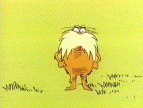
lorax“I am the Lorax. I speak for the trees. I speak for the trees, for the trees have no tongues.”

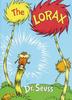
Who would ever believe that the popular children’s book, The Lorax by Dr. Seuss, has been banned? Working in the elementary schools, I do take the time to focus on Earth Day and environmental issues. Every year, I share The Lorax with my classes because I think that this book is a wonderful introduction for children about respecting and taking care of the earth. Obviously, not everyone shares my belief since this book was banned in 1989 by the Laytonville, California School District because the book “criminalizes the forestry industry.”lorax

In The Lorax, the Once-ler wants to cut down all of the Truffula Trees to make Thneeds for money. The tree-loving Lorax tries to stop the Once-ler. As the Once-ler destroys more of the trees and builds more factories, more of the surrounding environment is destroyed until the very last Truffula Tree is cut down. With no more trees, the factories are no longer profitable. They close. The area is polluted and the town becomes deserted with only the Once-ler left to tell his story. Fortunately, the Once-ler has saved one seed to give to a young child.

“You’re in charge of the last of the Truffula Seeds. And Truffula Trees are what everyone needs. Plant a new Truffula. Treat it with care. Give it clean water. And feed it fresh air. Grow a forest. Protect it from axes that hack. Then the Lorax and all of his friends may come back.”

The book ends with hope that the earth can be saved. It only takes one person to make some change. Wow! This book should be an inspiration to both children and adults because of  its powerful message! The Lorax will always remain one of my favorites!

Happy Reading!              ~Donna

Decide For Yourself

foreverMy first experience with a library censorship issue concerned Judy Blume’s book Forever. It was the late ‘70s and some high school parents had protested the book being in our school library. When I asked why, my boss told me “the book condones pre-marital sex.”  The books I remembered reading as a teen certainly weren’t controversial, so I decided to read Forever myself to see what all the fuss was about.

 What I found was an intriguing story about Katherine, a senior in high school, who is strongly attracted to Michael, who has already been sexually active. As they acknowledge their feelings, they plan for Katherine’s first experience by going to a family planning clinic and getting her on the pill. They both feel that having sex will link them “forever.”

Soon after graduation the couple finds themselves working summer jobs in different states and it takes a toll on their relationship. Even though Katherine considers herself “in love” with Michael, she finds herself romantically attracted to a tennis pro at her summer camp. When Michael comes for a surprise visit, Katherine breaks up with him, telling him she’s found another relationship.

What I read was a sad story about a teen who grew up and learned that she wasn’t ready for a long-lasting relationship and regretted sleeping with her boyfriend while still in high school, not a book that “condoned pre-marital sex.”  My boss and I had a long discussion about our differing views and came to mutual understanding that we’d never agree about the book.

The experience taught me that I needed to read a book for myself and that I didn’t want others taking that right away from me by trying to ban the book from a library or school. Decide for yourself–Keep the right to choose by supporting Freedom to Read Week at your library!

A Beautiful Friendship

Published in 1977 and winner of the Newbery Award, Bridge to Terabithia by Katherine Paterson is simply a beautiful story that is told with a great deal of sensitivity which enables it to cover some tough subject matter. I love this book. Each year that I was a teacher I would read this book aloud to my 5th grade class. First and foremost Bridge to Terabithia is the story of the friendship that develops between 10-year-old Jess Aarons and 10-year-old Leslie Burke. Jess has lived in a small rural town all of his life. Leslie moves into the house that is the closest to Jess’s. She is a city girl, an only child, who is confident and comfortable in herself.  Leslie needs her inner strength because she doesn’t fit the community’s idea of what a girl should be and do.


Using her imagination Leslie begins to expand Jess’s world. Together they create the imaginary country of “Terabithia” in the nearby woods. The castle that they build is a refuge that gives them one place where the outside world of teachers, bullies, and families cannot reach them. Led by Leslie, their imaginations soar. They become each other’s best friend. (SPOILER ALERT!) While Jess is away on a rare Saturday outing to Washington, D.C., Leslie dies in an accident. Her death devastates Jess, but he knows that he can no longer go back to the Jess he was before Leslie came into his life. This wonderful book concludes with Jess realizing that he can take what he learned from Leslie and pass it on to others, starting with May Belle, his younger sister. She becomes the new queen of Terabithia.


Seeing the movie is not something I will ever be able to do, but the movie has made me hope that out there somewhere there may be a former student who will remember.

~Janet

Perks of Being a Wallflower

perks

The Perks of Being a Wallflower by Stephen Chbosky has been causing a stir since it was first published by MTV in 1999. It has been banned from schools in Massachusetts and New York. In 2008 it was number 6 on the ALA’s top ten list of challenged books. For more on the author’s thoughts about his work being banned, read this interview.

I chose to read this book because I had heard the hype, had been asked by parents about the book, and just needed to know for myself what it was all about. From the things I had heard I was expecting 200 pages of sex, drugs, and f-bombs.

What I found  was a touching story about a teenager who had to deal with a lot of serious issues in his life. I enjoyed the pop culture references (that are totally dated at this point), the awkward family moments, and the genuine friendships that Charlie develops. I think the main flaw of the book is the sheer number of issues Charlie faces: suicide, date rape, homosexuality, drug use, teen pregnancy, domestic violence, and abuse. He struggles with these issues (any one of which would be a lot to deal with) while trying to navigate through high school as an outsider. Chbosky writes about each issue on his checklist of traumas with sensitivity and compassion and Charlie does a decent job of coping.

While there are definitely better written books for teens that deal with the issues found in The Perks of Being a Wallflower, I am glad to have finally read this book, which left me with two thoughts. First, I miss that feeling of being infinite and second, you can’t always believe the hype.

S.E. Hinton’s Classic

I was in 7th grade when I read The Outsiders for the first time. I had to read it for a class otherwise I probably wouldn’t have picked it up, and I would have missed out on something special.  It’s a realistic, and therefore not always pretty, look at life for “greasers” from the wrong side of the tracks. The desire to ban this book is usually because of that authenticity, with reasons such as drug and alcohol use and “virtually all the characters were from broken homes” cited. [See Novelist

The great books usually have someone or some theme that the reader can identify with in the story. I wasn’t from a broken home nor did I wear grease in my hair, but I could relate to some of what the characters were going through.  And what about the kids who do identify completely with it’s harsh reality? Is banning their stories the right message to send? As author Chris Crutcher said, “When we censor these stories, we censor the kids themselves.” (Read more in his excellent letter on this topic.)

But where books can really make a difference is in shedding light on something you had little or no idea about before. After reading this book, I understood more of what it was like to be an “outsider” and have a family so much different than my own. S.E. Hinton’s book gave me a more nuanced and balanced understanding of the world, and to many other teenagers before and after me.

−Julie

To Kill a Mockingbird

to kill mockingbird

I’ve read To Kill a Mockingbird at least two times in print and seen the movie several times as well. Last year I listened to the newest audio book version read by Sissy Spacek. She brings a special talent to this book, and the audio book won the 2007 Audie Award for Classics. The novel won the Pulitzer Prize, has been translated into more than forty languages, and has sold more than thirty million copies worldwide. Most recently, librarians across the country gave the book the highest of honors by voting it the best novel of the twentieth century.  It’s one of my favorite books. The book and movie blend together in my mind, and Atticus will always have the face of Gregory Peck. Scout, of course, is the  character I liked best, and she’s one spunky little girl, wearing overalls instead of dresses, and challenging the rules set forth by her aunt and housekeeper. When I was in  high school, the boys in my class were also taken with the novel, and gave the nickname “Boo” to one of the popular boys in the class.

It’s been challenged due to various reasons- use of the “N-word” and other objectionable words such as “damn” and “whore lady.” Most of the challenges are objections to its racial themes and objections by some back readers to the use of racial slurs. Despite the challenges, nearly fifty years after its publication, To Kill a Mockingbird continues to be read in schools and by people of all ages, and is viewed by critics as a novel of initiation and an indictment of racism.

~Ann

Captain Underpants

captain2I know, I know, the Captain Underpants series by Dav Pilkey is not one of those weighty banned books – but boy is it fun! My son, a typically reluctant reader, was introduced to the series when I brought them home from work. Reading together, we laughed and laughed. Short chapters, lots of pictures and of course, the bathroom humor, kept him begging for more and then, magically, reading them himself. It didn’t hurt that the stars of the series, George and Harold, kids bent more on drawing than academics, beat the bad guys every time.

George and Harold, two clever class clowns who write and sell comic books to their classmates about a caped, undies wearing superhero, also manage to thwart the school establishment with silly pranks. One day, while hypnotizing their crabby principal Mr. Krupp, he accidentally turns into their comic character Captain Underpants.  Together, they fight bad guys named Professor Poopypants or the Incredibly Naughty Cafeteria Ladies from Outer Space.

The Captain Underpants series has been questioned for violence (due to the clever Flip-o-ramas, live action scenes of our heroes’ close calls), inappropriate language and ‘modeling bad behavior’. Yes, the language can be crass, but is also full of alliteration and wordplay like teachers named Miss Anthrope.  Yes, George and Harold are a bit rebellious, but their pranks are harmless and hilarious. In the end, what’s essential is that kids will read what they like and they like Captain Underpants a lot. And whatever gets them reading is “Tra-la-la” to my ears.

~ Dori