The Poetry We Can Find in the World

Image result for poetry

For the upcoming National Poetry Month, which starts in April, I’ve been thinking about places we find poetry outside of poetry books.  Of course, if you think about it, the subject of poetry can be very wide, for poetry is often used as a metaphor to describe a moment of beauty or clarity that doesn’t necessarily have to do with the verbal art of poetry proper, but instead is related to our experience.  For example, this morning, driving to work, I saw a group of black birds rise up into the sky, and the scene to me was like poetry – there was something graceful about it, even moving, how they all rose up together as is borne up by a great wind, and how quickly it happened, and as quickly moved out of view.  Of course, I wasn’t reading a poem about birds, I was seeing birds in flight, but something about the experience struck me as poetic.  But what does this even mean?

John Stuart Mill, a British philosopher and political economist from the 19th century, also had some interesting thoughts about poetry.  In an essay he wrote called “Thoughts on Poetry and its Varieties,” Mill argued that poetry should not be defined based on “metrical composition” alone, “metrical composition” referring to the way in which poetry is often concerned with the rhythm of a sentence or a line.  But Mill thought defining poetry exclusively based on its focus on rhythm was not true to the spirit of what we mean when we talk about poetry in the wider sense.  Mill goes on to say in the essay that he does think poetry contains a “difference” that sets it apart from other experiences, though this difference can be found in other art forms as well, including prose, music, sculpture, painting and architecture, and maybe even outside those art forms.  So what is this difference?

Here is how Mill describes this difference:

“The object of poetry is confessedly to act upon the emotions;—and therein is poetry sufficiently distinguished from what Wordsworth affirms to be its logical opposite—namely, not prose, but matter of fact, or science. The one addresses itself to the belief; the other, to the feelings. The one does its work by convincing or persuading; the other, by moving. The one acts by presenting a proposition to the understanding; the other, by offering interesting objects of contemplation to the sensibilities.”

So for Mill, the opposite of poetry is not prose.  The opposite is instead “matter of fact, or science.”  For Mill, there is a wide gulf that separates the things that persuade us (having to do with beliefs, facts, and even reason), and the things that move us (having to do with feelings, emotions).  Indeed, Mill believe there is an intimate connection between the world of poetry and the world of feelings.  Poetry refers to an experience during which we are moved, during which our feelings are stirred and we are pulled out of our habitual thoughts to contemplate something interesting, different, even sublime.  Poetry slows us down, so that we can focus on something that shakes us, that makes us feel wonder.

Although Mill does distinguish poetry from science, I don’t think it is too far a stretch to say that science can also be poetic.  I’m sure readers of the late Stephen Hawking would agree that there is something awe-inducing about contemplating the universe itself, which causes us to feel wonder at the sheer fact of existence at all!

So, dear reader, what are some moments in your life when you have a poetic experience, when you experience the poetry of your own life?  Does it have to do with a relationship, of seeing a friend or loved one smiling or laughing?  Does it have to do with a moment in nature, noticing the color of the sky or marveling at the growth of a certain tree?  Does it happen during peak moments, like a wedding or a funeral, or does it happen in quiet moments, like cooking dinner with a spouse?  Either way, I hope that during this National Poetry Month you are able to feel and experience and see the poetry in your own life – and maybe even write a poem about it!

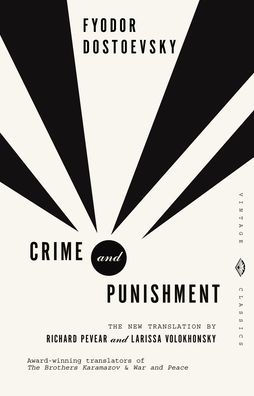
Image result for blackbirds flying up into the sky


The Important Experience of Rereading Books

Crime and Punishment (Pevear / Volokhonsky Translation)

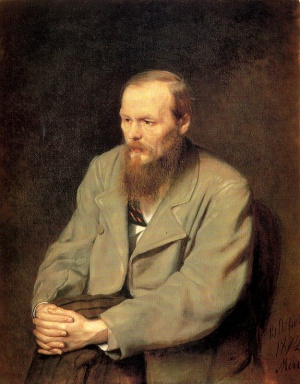
While it’s probably a truism that books don’t change, we do, I’ve been experiencing that in a weird and interesting way as I read Fyodor Dostoevsky’s Crime and Punishment.  I read the book when I was an undergraduate, and to this day my memory of reading the book is bound up with the place where I read it, a coffeehouse in Ann Arbor, where I sat in the back at a large table and became immersed in the book.  I remember the coffee smell of the place and the hard wooden table, I remember the cover of the book, and I remember being fascinated by the character of Raskolnikov, but that’s about it.  Our memories are so idiosyncratic and sometimes unreliable, though it seems so strange that I would forget pretty much the entire book, whole plot elements and groups of characters.

But recently, in preparation for a book club I’m hoping to start this summer on the classics, I bought a copy of Crime and Punishment (since I work at a library I rarely buy books now, though I wanted to mark up my copy), and I’m starting to wonder, in a weird way, how I read the book, meaning did I just hurry through it?  Did I savor the characterizations, the manic and frenzied energy, the strange oscillation between horror and laughter?  Why don’t I remember more of it?  What did I read?  I’m also taken aback by this fact because there is so much to think about and remember about the book, and I wonder how or why I wasn’t as sensitive to this.  I wonder that if I were to have been more sensitive to Raskolnikov’s guilt, more empathetic to Marmeladov’s suffering, but also more horrified by Raskolnivkov’s murders and plight, I would have remembered more.

I had an interesting experience as an undergraduate in a creative writing class that I think could shed some light on this conundrum.  I had a great teacher, who was very incisive and penetrating in his comments on our stories, and I remember I wrote a story that had to do with the fraternity where I was living then, and the debauched life that came then with living in the fraternity (the drinking, the uncleanliness, etc.).  I wrote a story that looked upon this material as comic, and I remember the class seemed to like it and let me know during the workshop that they thought it was funny.  But when I met with my creative writing teacher, he said something that made me pause and rethink the whole piece, and in doing so, pretty much rethink my life.  And what he said was something along the lines of, “What about the more tragic elements of this lifestyle in the story?  Aspects that are not funny but are more sad, even depressing?  Have you thought about that?”  And I hadn’t!  And I came away with a shock from the meeting – I felt suddenly more self-aware, and a bit nauseated by the callow lifestyle I had been leading.  It was an about-face, a turn-around, and it left me with a different, better, more humane and human perspective.

When I read Crime and Punishment for the first time I was still living the debauched fraternity life, and it never occurred to me that my life could affect how I perceived the book.  But I wonder if I read it somewhat superficially (and again, I wonder – how can you read Dostoevsky superficially?  He almost compels your attention, it’s that good), and that I didn’t take in certain elements because that wasn’t where my mind and heart were.

Flash forward more than a decade, and the book is a revelation.  It’s terrifying and sad and tragic and funny, all sometimes on one page, and I’m so happy to be reading it.  But the truism does hold true – the book hasn’t changed.  It’s the same translation, the same words, the same plot, the same characters.  But I’ve changed.  I’ve grown older, and hopefully less superficial, and I’m taking more of the novel in and appreciating it.  Sometimes rereading a book can have that effect on you – it calls attention to where you were at during your first reading, and reflects back to you how far you’ve come.  It’s a kind of mirror, where you can look at your old readings and, in a healthy and productive way, question your beliefs and values – it facilitates the process of self-examination.  And since, as Socrates said, “the unexamined life is not worth living,” rereading books is a necessity.

Image result for Dostoevsky

Dostoevsky

Why Criticism Matters

Image result for literary criticism

I love reading book and movie reviews.  Sometimes I see a movie, or read a book, and I’m completely bowled over by it.  I am moved to my very foundation, my core, I am shaken…but I don’t know exactly why sometimes, and sometimes I lack the ability to put into words just why exactly I’ve been so touched (or so disappointed, for that matter).  That’s why I love reading book and movie reviews of films and books I’ve just experienced – they put into words, in an often artful, intelligent, and helpful way, just what I’ve been struggling to say or express.  Ralph Waldo Emerson, one of our great American writers and thinkers, wrote, “In every work of genius we recognize our own rejected thoughts; they come back to us with a certain alienated majesty.”  I’ve always loved that quote – what a great way of describing the way in which artists and writers and thinkers help us to say what we want to say – but I think the quote also applies to book and movie reviewers, (even if they’re not exactly a work of genius!).  We see a movie, we like it, we don’t know why, we read a movie review, and suddenly our own feelings and thoughts come back to us “with a certain alienated majesty.”  It’s a great, wonderful feeling.

I’m writing about book and movie reviews, but what I really wanted to talk about in this blog post is literary criticism, and let me explain why.  In the same way in which a book review deepens our appreciation of something, (or for that matter deepens our understanding of why we didn’t like something), literary criticism can do the same thing, and often does.  In a sense, we can think of a work of literary criticism as an extended treatment of something we care about, by someone who also cares an inordinate amount about this thing, and also most likely knows and has thought a great deal about this thing.  When you read a book and really enjoy it, but don’t understand as much as you’d like about why you enjoyed it, finding a work of literary criticism that talks about that book can be edifying.  But more than that – it can really deepen your understanding of the work, it can augment what you were intuiting but not exactly saying, and it can therefore extend your appreciation of the work to deeper levels.  (It can also, it should be said, question your own beliefs about the object, and make you think anew about the work in question.)

As I talked about in my last blog post about Tolstoy, I finished one of Tolstoy’s novels, Anna Karenina, and loved every page.  But I left with some unanswered questions.  How was I to think about Anna, her fate, her character, her life?  Or for that matter, what was I to make of Stiva Oblonsky, or Levin, or Kitty?  These characters made a deep impression on me – I felt like I really got to know them, in a way that real life makes it hard to do – but in a way what I felt after finishing the novel was that I wanted to know more.  The book had finished, but I wasn’t finished with the book.  I wondered about how Tolstoy himself intended for us to think and feel about his characters.  I wanted my understanding to be enriched and made more complex.  So for that reason, I found a book through CLEVNET called Anna Karenina in Our Time: Seeing More Wisely by Gary Saul Morson, a professor of Arts and Humanities and Slavic Languages at Northwestern University.

And I haven’t been disappointed.  I’m about sixty pages into the book, and can already say that Morson has made me rethink my original take on Anna Karenina.  He makes a very compelling and convincing argument, for example, that one character in particular embodies evil for Tolstoy – an argument that has changed the way I thought about the character, who is mostly a good-natured socialite who everyone in the novel seems to like.  Now I’m reading a chapter about Anna – the character I was most curious about learning more – and am coming to terms with a lot of traditional interpretations of her character, as well as Morson’s more heterodox interpretation.  It has been such a thrilling experience!  It feels like this perennially interesting book club or conversation, where I am able to converse and commune with an expert on something we both share and care about and even love.

That’s what good criticism can do (and not just for books, of course, but movies, art, television, theater, dance, music, etc.).  It enables there to be a deep conversation about a shared object that elicits strong feelings for those involved.  It shows us new angles, new directions in our thought, new perceptions that we hadn’t considered and wouldn’t have considered had we not found the work of criticism.  And although much criticism, at least for my taste, can be way too abstruse and theoretical, that is not true for all criticism, not in the least.  So let me end by encouraging you, reader, to find a piece of criticism that helps you to understand a work on a deeper level.  A good place to start is the New Yorker, which has three good film critics (David Denby, Anthony Lane, and Richard Brody), as well as a stellar book critic named James Wood and a wonderful theater critic named Hilton Als.  (They also have great music and art critics.)  The New York Times also has excellent film critics, as does the Los Angeles Times.  Each critic has their own taste, and they go out of their way to make an argument, to start a conversation, to convince you that their interpretation is right.  You might agree or disagree with them, but you should come away with an enriched understanding of the work in question, and maybe even a deeper appreciation of life itself.


Why Read the Classics (Or, Why the Classics Are Not Boring!)


Image result for tolstoy

Tolstoy

In this blog post, I want to argue that the classics are not just immense tomes that accrue dust on the shelf of the library or a bookshelf, but are instead living, breathing documents that reflect back to us our humanity.  I’m starting with this lofty statement, because recently I have become obsessed with the 19th century Russian novelist Leo Tolstoy, who was born in 1828 and died in 1910.  Tolstoy was an outsized personality, and he was not only a great novelist but also, following a moral crisis in his forties, a Christian anarchist and pacifist.

But although I find Tolstoy’s detours into anarchism, Christianity and pacifism interesting (his advocacy of non-violent resistance was a great influence on Gandhi), I have to say that it is his novels that really excite me.  Anna Karenina, for example, which I finished about a month ago, was this really amazing exploration of one woman in Russian society who bucked the norms (she was a married woman who fell in love with another man) and then had to face the tragic consequences.  There were scenes in that novel that felt so true to life – it was such a remarkable and uncanny reading experience.  (Isaac Babel, another famous Russian writer, once wrote that “If the world could write itself, it would write like Tolstoy.”)

One of the best things about the book was the way the characters changed and aged.  I think characters changing is one of the hardest things to pull off in a novel, because the novelist really needs to give a fine-grained and textured evocation of the interior lives of the characters in order for us to fully believe in the changes they undergo.  They also must know their characters so fully and deeply to really convey how they change.  In other words, he or she must be able to see into the minds and hearts of other fictional people – to be a very deep psychologist.  I thought Tolstoy was so good at doing just that, and for that reason his characters felt so utterly real, and I really cared about them.  In the fate of Anna, we could see our own foibles and passions reflected.

There is a scene near the end of the novel, where Anna is riding on a train.  I don’t want to give too much away, but it is a very tumultuous moment and time in her life, and Tolstoy gives us Anna’s inner monologue – the kind of scattered, fragmented thoughts that populate her mind as she looks out the train window and melds her inner world with the world she sees.  It is so well done – we feel like we are actually privy to another person’s thoughts, and the thoughts feel so real, so like our own thinking, that it is impossible not to empathize with Anna’s state of mind.  The novel reflects back to us our own humanity – it allows us to see our own selves more capaciously – and at the same allows us to empathize deeply with Anna.  It is truly a heart-wrenching moment.

And that’s the thing – Anna Karenina is a classic.  But this does not mean a big book that no one reads anymore, or shouldn’t read anymore!   Instead, it is this very profound, wonderful, fresh and moving story about families and individuals, set against a vast panorama of Russian society in the 19th century.  That’s one of the things I’ve learned from reading Anna Karenina, and now War and Peace, which I’ve read about half of – the classics are classics because they are fabulous!!!  They are timeless snapshots of fictive life, and they demand to be read.  They can be challenging and fun at the same time, but they are not just boring books that no one reads anymore.  Instead, they are deep explorations of what it means to be human, to be thinking and feeling beings, with crises, problems, and dreams.

Image result for anna karenina book cover


Andrew’s Top Ten Books of 2017

1. Anna Karenina – Leo Tolstoy

Anna Karenina

This is my first time reading this gargantuan novel, and I have to say it is one of my favorite novels I”ve ever read.  The book feels so close to life, and each character is so robust, so vivid, and so memorable.  A must read for novel-readers of all stripes.  

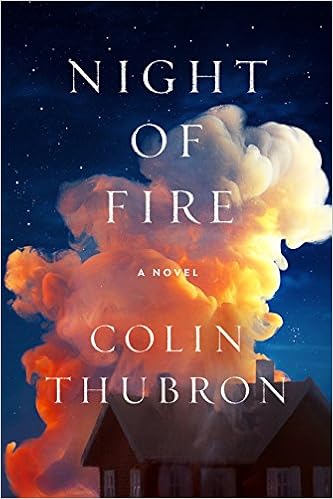
2. Night of Fire – Colin Thubron

I loved almost every aspect of this novel.  It centers around a house fire that kills each of the house’s inhabitants, and each chapter begins with the fateful fire and one character’s experience of the fire (each chapter also ends with the character just before death or even during death somehow). But the majority of each chapter is taken up with narrating pivotal moments in the lives of each character, often having to do with love affairs or familial relationships or friendships.

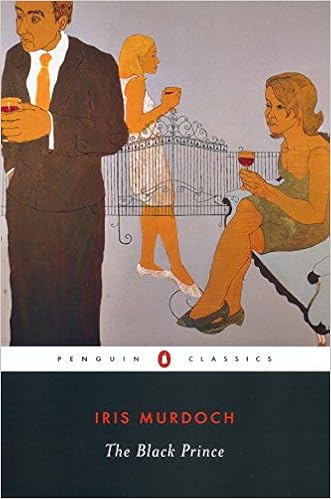
3. The Black Prince – Iris Murdoch

This is a disturbing, funny and very dark novel about a retired English tax-collector who wishes to get away to write his “great novel,” but he gets progressively more embroiled in life, in the messiness and cacophony of life – and at a certain point he falls ridiculously and disturbingly in love with his best friend’s daughter.  

4. A Living Covenant: the Innovative Spirit in Traditional Judaism– David Hartman

Living Covenant: The Innovative Spirit in Traditional Judaism

A wonderful book about productive ways to interpret various aspects of Judaism so as to make it into a living practice. Hartman is an astonishingly fertile and strong thinker, and I loved seeing him wrestle with his own Jewish influences, as well as work to make Judaism something viable for modern times.

5.  Why Buddhism is True: the Science and Philosophy of Meditation and Enlightenment – Robert Wright

Although the title is kind of noxious, this was a fascinating book about the relationship between evolutionary psychology and mindfulness meditation.  

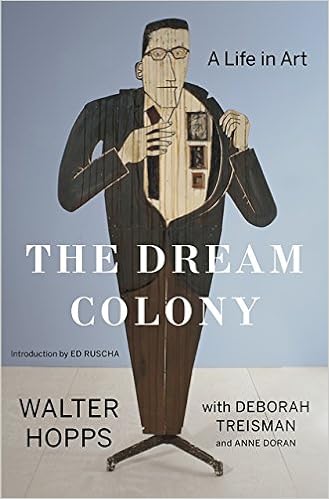
6.  The Dream Colony: A Life in Art – Walter Hopps

Hopps was a famous curator of 20th century art – he was the first to put on a show of Pop Art, and he curated some amazingly early and deservedly famous shows of Joseph Cornell and Marcel Duchamp. But aside from all of his accolades, Hopps himself, in all of his zaniness, was such a fabulous and engaging storyteller, that the book was difficult to put down. He also had a seemingly photographic memory of the shows he put on, so we’re really given insight into what it was like to curate some huge and important shows of American art.

7.  Family Lexicon – Natalie Ginsburg

Family Lexicon (New York Review Books Classics) by [Ginzburg, Natalia]

This book takes place in Italy during the 1920’s and World War II.  It is a memoir of sorts, about Ginsburg’s family.  Her family, especially her father, is hilarious and memorable, and I found the book to be funny, wry, and sad.  Although the historical background proves to be momentous to the story, we are presented more with the minutia of Ginsburg’s family’s everyday life rather than history on a grand scale.      

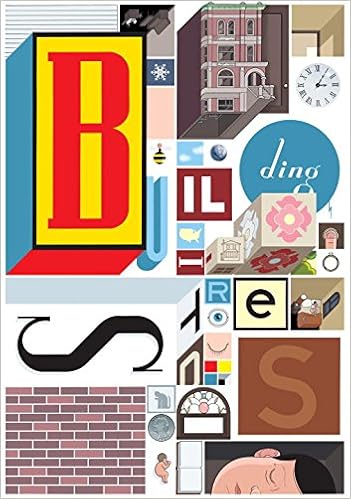
8. Building Stories – Chris Ware

This is an absolutely amazing graphic novel, in design and content, about the inhabitants of an apartment building in Chicago.  It especially focuses in on one inhabitant, a woman who lives alone and works at a florist, and then later catches up with her and her family life.  The work is not irreverent in the way Ware’s early work is – it is quiet and serious and lovely.  I loved and was moved by every frame.

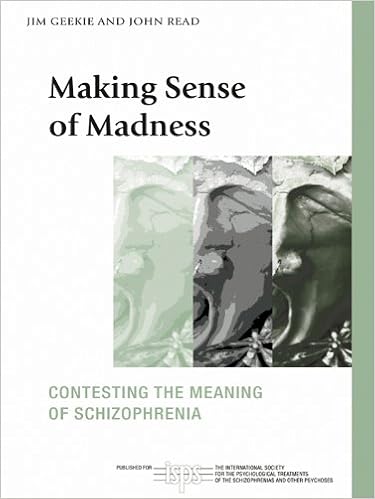
9.  Making Sense of Madness: Contesting the Meaning of Schizophrenia – Jim Geekie and John Read\

There should be more books like this. The book is accessible, humane, and challenging, and primarily written for the lay person. As someone with a family member who had schizophrenia, I felt I was able to understand the illness better.  The authors are skilled at communicating complicated concepts in non-clinical terminology. There is also a great chapter on the subjective experience of madness, using excerpts from client interviews.

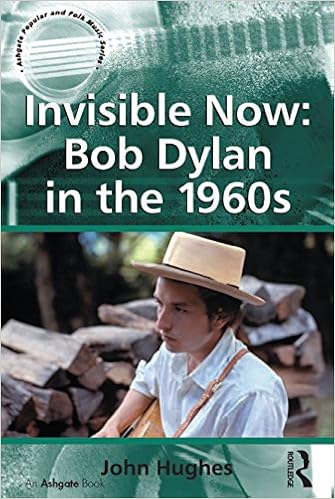
10. Invisible Now: Bob Dylan in the 1960’s

This was the best book I’ve read so far about Dylan.  It focuses on Dylan’s body of work in the 60’s, and challenged me to think anew about my favorite musician.