A Literary Summer

By Alyssa Nicole

Summer is a favorite season for many, although I do not include myself in this statement. I am an autumn soul (so much so that I have a maple leaf tattooed on my arm and an orange cat named Pumpkin Waffles) but I do appreciate every season and enjoy what each one has to offer. For me, summer is holiday picnics enjoying my mom’s famous macaroni and potato salads, mango rose sunsets shimmering like spilled paint across Lake Erie, golden lightening bugs bejeweling blades of grass, and evening ice cream excursions. It’s taking day trips to parks and gardens, toasting marshmallows over a blazing campfire, watching fireworks erupt in explosions of vibrancy and of course, reading beneath the dappled shade of an oak tree while sipping a mason jar of lavender lemonade. In literature, important events often play out in these golden months, especially in coming-of-age novels where summer is the setting for growth, change, and new beginnings. It is the season for romance in many a story. Couples finding love beneath the infinite empyrean paradise that is a summer sky. Summer magic can be found in the foaming bubbles of ocean waves kissing the sand, in the kaleidoscopic colors of a carnival or in the glittering stars bursting from a sparkler. It is easy to see why this is the season that receives so many accolades from authors and is perhaps the most popular seasonal setting in stories of all genres. Here are some literary quotes about summertime!

“Summer afternoon – summer afternoon; to me those have always been the two most beautiful words in the English language.”

– Henry James

“Summer was our best season: it was sleeping on the back screened porch in cots or trying to sleep in the tree house; summer was everything good to eat; it was a thousand colors in a parched landscape; but most of all, summer was Dill.” – Harper Lee To Kill a Mockingbird

“Everything good, everything magical happens between the months of June and August.” – Jenny Han, The Summer I Turned Pretty

“Rest is not idleness, and to lie sometimes on the grass under trees on a summer’s day, listening to the murmur of the water, or watching the clouds float across the sky, is by no means a waste of time.”

– John Lubbock, The Use of Life

“In the summer, the days were long, stretching into each other. Out of school, everything was on pause and yet happening at the same time, this collection of weeks when anything was possible.” ―Sarah Dessen, Along for the Ride

“The castle grounds were gleaming in the sunlight as though freshly painted; the cloudless sky smiled at itself in the smoothly sparkling lake, the satin-green lawns rippled occasionally in a gentle breeze: June had arrived.”

―J.K. Rowling, Harry Potter and the Order of the Phoenix

“All in all, it was a never to be forgotten summer — one of those summers which come seldom into any life but leave a rich heritage of beautiful memories in their going — one of those summers which,

in a fortunate combination of delightful weather, delightful friends and delightful doing, come as near to perfection as anything can come in this world.” —L.M. Montgomery, Anne’s House of Dreams

“Shall I compare thee to a summer’s day?

Thou art more lovely and more temperate:

Rough winds do shake the darling buds of May,

And summer’s lease hath all too short a date”-William Shakespeare Sonnet 18

“In early June the world of leaf and blade and flowers explodes, and every sunset is different.” ― John Steinbeck, The Winter of Our Discontent

“One benefit of summer was that each day we had more light to read by.”-Jeanette Walls The Glass Castle
Fairy Folklore

By Alyssa Nicole

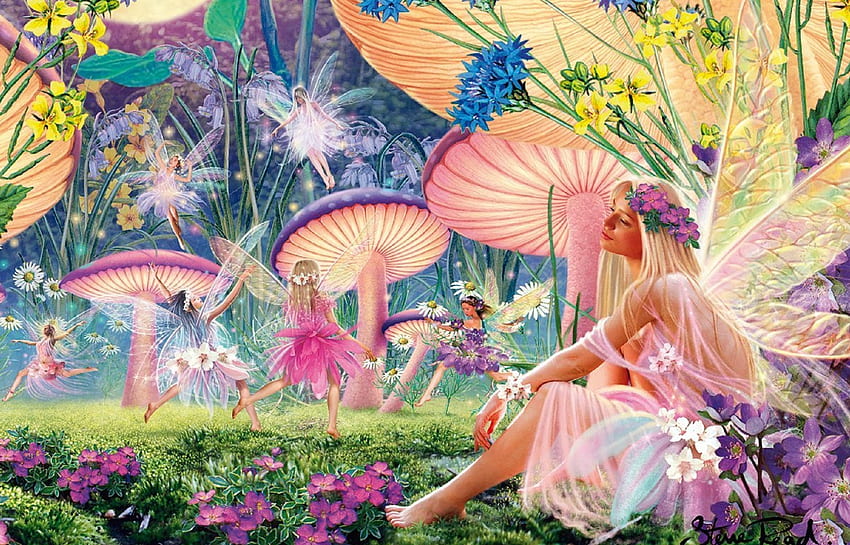
May finally approaches, the golden days are slow and sweet like dripping honey. My husband and I, like many people, are preparing our yard for the warmer weeks ahead. The most recent addition to our little piece of the world is a fairy garden. It is a quaint little village on the path leading to our porch, with a tiny toadstool, a miniature moss-enrobed bench, a graceful fairy, a portly gnome and a little garden door that looks as though it’s a liminal space between our world and the realm of the fae. Naturally, this little project has intrigued me to check out books on fairies in the literary world.

For those interested in etymology, the word “fairy” is derived from “fata” in Latin, translating to goddess of fate. In Old French, “faerie” means enchantment. Fairies are often portrayed as mischievous, clever, whimsical, and sometimes shy. Upon pouring over stories featuring some of the most famous fairies born from ink and paper, I have discovered a wide variety of personalities that both corroborate and deviate from the fairy archetype.

Tinkerbell is Peter Pan’s most loyal companion and perhaps the most-well known literary fairy to young and old. She was born, like all fairies in this story, from a baby’s first laugh. As wholesome as this sounds, Tinkerbell is no angel. She is quite conceited, jealous and has a tremendous temper that far exceeds her petite frame. It is said that fairies, or at least fairies in J.M Barrie’s universe, are so small they can only be one thing at a time. So when Tinkerbell is bad, she is all bad with no room for goodness and vis versa. She often uses her cunning and cleverness to try to get rid of Wendy for good, wanting no female getting in the way of her Peter Pan.

Puck, the mischievous mis-matchmaker from Midsummer Night’s Dream, is suitably named. For the word puckish is defined as “playful, especially in a mischievous way.” He lives up to his moniker by ensorcelling two men to fall in love with the same woman, wreaking havoc amidst the couples. Titania, the fairy queen, is fierce and intransigent, refusing to submit to her husband’s demands for her to give up her changeling child. It is mischievous Puck, once again, who causes trouble when he brews up a concoction that makes Titania fall in love with a donkey. A cruel, albeit temporary, punishment devised by her husband. Titania is concerned about the impact their quarrels are having on the environment, showing solicitude for the world around them.

In Susanna Clarke’s Jonathon Strange and Mr. Norrell, a nameless fairy known as “The Gentlemen with The Thistledown Hair” is perhaps the most wicked of the fairies on this list, tricking a man bargaining for his wife’s resurrection after her death. He agrees to let her husband keep her for half of her life and claims that he will get the other half. The catch is that he splits her life in such a way that she is constantly caught between two worlds: the mortal realm and the fairy realm. There are times when her body is there, but her soul is trapped in the Otherworld.

The fairies in at least some of the classic fairytales tend to be more magnanimous, granters of wishes and dreams. The fairy godmother in Cinderella is not your typical tiny sprite. She is a being of benevolence and kindness rather than trickery and impishness. Six of the seven fairies in Sleeping Beauty gift the infant Princess Aurora with intangible yet wonderful presents: that she would be the loveliest person in the world, cleverness of an angel, grace in all she did, she would dance to perfection; sing like a nightingale and would play beautiful music on all kinds of instruments. The seventh, of course, is one of the most famous female villains of all time and is a bitter and vengeful fairy who curses the young princess to prick her finger on a spinning wheel and fall into an eternal slumber.

Greek mythology, nymphs are very similar to fairies. They have more human-like qualities and are further broken down into the natural realm in which they dwell. These include, but are not at all limited

to dryads (tree nymphs), naiads (fresh water nymphs) anthousai (flower nymphs) aurai (breeze nymphs) and asteria (nymphs who dance among the stars.) A famous nymph from Greek mythology, is Oenone. She was a naiad and jilted wife of Paris. Her mortal husband leaves her for a woman if immortal beauty, the famous Helen of Troy. In Margaret George’s retelling of the story, Oenone rejects Helen’s pleas to heal Paris after he is fatally wounded in the Trojan War.

Oddly, fairies do not play an important role in the very popular fantasy series, Harry Potter. Here are loosely referenced as being very vain creatures, humanlike with insect wings. They often allow humans to use them as decorations. Pixies, however, make an appearance in the Chamber of Secrets book. They are blue with large ears and beady eyes, mischief-makers of prodigious strength.

Fairy lore is varied and fascinating. If you are interested in learning more about the various types of fairies and their magical symbolism, I highly recommend “Fairy Magick” by Aurora Kane. She delves into various types of fairies, lore, and ways to immerse yourself in the mystical realm of these fantastical creatures.

“All you need is faith, trust, and a little bit of pixie dust!” -Peter Pan

Inspirations From Anne

By Alyssa Nicole

There are certain characters from literature that I’d love to befriend if they existed in real life. I found a “kindred spirit” in Anne Shirley, the optimistic, life-loving protagonist of the Green Gables series. Her enthusiasm is contagious, and her joy radiates like the rays of the sun. How I would love to picnic with her beside the “Lake of Shining Waters,” explore the beauties of “Violet Vale, ”or go strolling beneath the blossomed trees in “The White Way of Delight.” Alas, the closest I can get is through the pages of L.M Montgomery’s heartwarming series. It is fitting that Anne eventually becomes a teacher, for I have learned many lessons and have discovered a treasure trove of inspiration through her musings and words. Here are many of my favorites:

“Life’s is worth living as long as there’s a laugh in it!”

“People laugh at me because I use big words. But if you have big ideas, you have to use big words to express them, haven’t you?”

“…because when you are imagining, you might as well imagine something worthwhile.”

“Oh, it’s delightful to have ambitions. I’m so glad I have such a lot. And there never seems to be any end to them– that’s the best of it. Just as soon as you attain to one ambition you see another one glittering higher up still. It does make life so interesting.”

“People laugh at me because I use big words. But if you have big ideas, you have to use big words to express them, haven’t you?”

“It’s been my experience that you can nearly always enjoy things if you make up your mind firmly that you will.”

“I’m so glad I live in a world where there are Octobers.”

“Tomorrow is a new day with no mistakes in it… yet.”

“The world calls them its singers and poets and artists and storytellers; but they are just people who have never forgotten the way to fairyland.”

“I read in a book once that a rose by any other name would smell as sweet, but I’ve never been able to believe it. I don’t believe a rose WOULD be as nice if it was called a thistle or a skunk cabbage.”

“Dear old world’, she murmured, ‘you are very lovely, and I am glad to be alive in you.”

Alice, Always

By Alyssa Nicole

“Begin at the beginning and go on till you come to the end: then stop.”-King Of Hearts, “Alice’s Adventures in Wonderland”

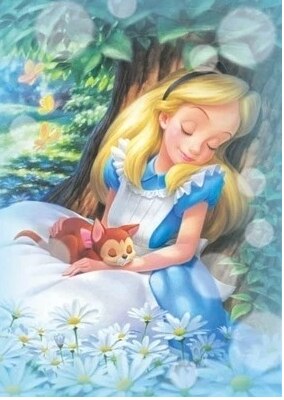
A young girl wearing a dress the color of cloudless skies tumbles down a rabbit hole in pursuit of a frantic waistcoat-wearing critter. Sound familiar? Alice in Wonderland, the whimsical children’s tale born from the brilliant mind of author Lewis Carroll, has been a beloved tale since 1865. This story holds a special key to my heart, for I was lucky enough to be cast as the eponymous character when I was sixteen years old. I coalesced myself with Alice’s character that summer, and to this day she and her story are imprinted upon my heart.

I read Alice’s Adventures in Wonderland and Alice Through the Looking Glass immediately after I was cast as Alice in my community theater’s summer production. I wanted to fully immerse myself in the character and the story so I could better understand my role and the cast of chaotic characters I would be interacting with. I quickly fell in love with both books, and wanted to do justice to the sprightly, inquisitive young girl I would be playing.

It was intimidating to say the least, being handed a one hundred fifty paged script, and then realizing I had lines on every page. I was diligent as I studied, with the help of my proud mother quizzing me every night. I so enjoyed working with the colorful cast of characters, who were just as zany outside of their roles as they were in them. I met a forever friend amongst them who would one day have an incredibly significant impact on my future. The summer of 2005 was as fantastical and dreamlike as Wonderland itself. I still vividly remember the excitement of donning my big blue dress, the bright spotlights of the stage as I sat daintily at the Mad Tea Party. It took many rehearsals not to laugh during that scene! I cradled the Duchess’s pig baby, recited ridiculous rhymes to the Blue Caterpillar, played croquet with the Queen of Hearts, enjoyed silly banter with the Cheshire Cat, and was nearly decapitated by the executioner in a chaotic court case! And no, I did NOT steal the Queen’s cherry tarts! After two weeks’ worth of performances, I took my final bow as Alice, a bittersweet moment that has become preserved as a forever memory in my mind. Photographs, pamphlets, and a wooden key remain pressed between the pages of my precious scrapbook.

It was not until I turned thirty that Alice in Wonderland would become significant to me again. It was the year that everything changed, much like my sixteenth year, taking a tumble down a rabbit hole once again. That day my mom and I challenged ourselves to a Wonderland-themed escape room, a clever recreation of the Carrollian classic. Months later, I reconnected with my old theater friend who needed actors for one of the plays that she had written. I acted in a few plays after Alice but had not done anything theatrical since I was a teenager. In my usual say yes to anything mentality I agreed to take a small role to help her out. It was in this skit that I met a fellow Alice aficionado, who (spoilers!) would one day become my husband. Our first date was spent comparing our Alice collections that led to over five hours of chatting and a magical summer of falling in love. That fall, I dressed up as Alice for a Halloween Murder Mystery Dinner with my boyfriend as Lewis Carroll. It was fun reprising my role as Alice again, even if it was for only one night. Two and a half years later, we got engaged. The summer before the wedding was one of the best I can remember. That July, my mom threw me an incredible Alice in Wonderland bridal shower at a lovely Victorian tea shop. Tiny tea pot boxes filled with favors sat at every place setting, and my mom created lovely candlesticks with teacups stacked on top of them. There was an amazing assortment of wonderful finger sandwiches, salads, fruit, and dainty delights. It was a magical day, wearing my ruffled cottagecore dress, sipping tea with my bridesmaids, doing an Alice oracle reading, and enjoying games and gifts. The final game was also Alice-themed, where people received points based on Alice-related related regalia (watches, hearts, top hats etc…). Now of course, no one in attendance was wearing a top hat, so when my mom called it out everyone glanced around the room at each other as if to confirm this fact. Suddenly from the stairwell, a man’s voice called out “I am!” and there was my husband- to-be, fully dressed in a Mad Hatter’s costume! My mom hatched this plan months prior, plotting with her future son-in-law and somehow successfully keeping it a secret from me. I screamed and leapt out of my seat, hugging him as though I had not seen him in 10 years, when in fact I had just seen him that morning. My mom joyfully cried, “Let’s get these two married already” and everyone cheered! And so, we were at our fairytale fall wedding.

Alice in Wonderland has made an impact on my life, the heart of many significant moments throughout the years. On the cusp of 34 years of age, I often find myself feeling like my own life is very much a Wonderland; confusing, chaotic, sometimes downright bizarre and a little bit scary. But all the same, it is whimsical, magical, wondrous, and a wild adventure full of twists and turns. Alice remains steadfast throughout all the chaos, yet flexible enough to acclimate to the ever-changing world she stumbled into. While this story in its essence is merely a fantastical dream of a young girl, it is also an inspiration to me in my own life’s journey. Carroll described Alice as “wildly curious,” “loving and gentle,” “trustful” and “courteous to all.” Though she was polite and respectful she had no trouble using her assertiveness when indignant over what she perceived as immoral or illogical, not unlike myself. She is inquisitive, clever and very brave. And yet it seems that Alice recognizes that oneself cannot be so easily defined. “Who in the world am I? Ah, that’s the great puzzle!” Ambiguity is the key that can unlock the door to self-discovery.

Another element I love about Wonderland is the openness to absurdity. I am quirky by nature and find that silliness brings levity and fun to routine. Why not believe in six impossible things before breakfast, as the Duchess does? Why not make up your own words to songs like The Mad Hatter? Why not make up your own rules to games like the Queen of Hearts? Nonconformity is often the mother of innovation and creativity. By thinking outside of the box, a Wonderland of possibility is at our fingertips.

Now I sit with a porcelain cup filled with chamomile brew, finishing off the last crumbs of homemade lavender teacake as I thumb through the well-worn pages of one of my most favorite stories. It is amazing how certain books can have such an enormous impact on your life, how the universe that an author creates from the depths of their own mind can still have an impact centuries later. Stories can be carried in our hearts, leave lasting imprints on our minds and interwoven with our psyches. Which books have shaped your life?

Eternally In Ink: My Theories On The Fates Of Literary Couples

by Alyssa Nicole


Yuanfen- (n) A relationship by fate or destiny; the binding force between two people
Fictional couples throughout the ages have become idealistic examples of what true love should look like. Their stories of star-aligned destiny and undying devotion ignite the hopeless romantic inside of many. Kilig, (pronounced keel-eeg) a unique Filipino word, is defined as the feeling of inexplicable joy one gets when something romantic or idealistic occurs. This word encapsulates why so many readers are drawn to these stories of the heart. Yet these books often end at the happily ever afters (or in some illfated cases, happily never afters.) It makes me wonder whether these literary couples could stand the test of time beyond the confines of the pages in which they reside. Here are my musings on some of the most beloved or “shipped” couples in literature.

Romeo and Juliet- Arguably, Shakespeare’s most well-known work, this tragic tale is certainly not lacking in passion and whirlwind romance. But if Romeo and Juliet had not taken their own lives in fits of despair, would they have made it last? Or would immaturity and inconstancy have been the death of their relationship if poison and dagger had not? It is evident early on that Romeo is capricious as many an adolescent boy, his affections for Rosaline instantly transferring to Juliet upon mere sight alone. Who’s to say that another fair maiden could not have just as effortlessly stolen his heart just by a glance. When professing his love for Juliet, Romeo begins to swear it to the moon. Juliet, wise for her thirteen years, replies, “O swear not by the moon,
th’inconstant moon, That monthly changes in her circled orb, Lest that thy love prove likewise variable.” Friar Laurence chastises Romeo, “Holy Saint Francis, what a change is here! Is Rosaline, that thou didst love so dear, so soon forsaken? Young men’s love then lies. Not truly in their hearts, but in their eyes.” Was Romeo’s devotion for Juliet more than mere infatuation? As for young Juliet, romance was a taste unfamiliar to her virgin palate. It is easy for a young girl to fall in love, but not nearly as easy to stay in love. Dealing with burgeoning foreign emotions, becoming a goddess in the eyes of a handsome young worshipper, is overwhelming to a girl barely on the cusp of womanhood. It is difficult to determine if her adoration for her besotted suitor is more than just the whimsy of youth. Their blazing passion would very likely have fizzled out had they survived into adulthood.
*Together Forever? No

Mr. Darcy and Elizabeth Bennett
Jane Austen’s beloved pair had a much rockier start than most, and it was certainly not love at first sight for them. Elizabeth is a headstrong heroine who knows her own mind. She has rejected an offer of marriage to her obsequious cousin, for she does not believe in matrimony without love being at its core. She has enough self-respect to even reject Darcy’s first proposal when he insults both her and her family. It takes time for her to better understand both Darcy’s character and his motives before her
heart begins to yield and she finds herself falling in love with him. Since Darcy is combating his own feelings for her, it is clear his love is both stronger and deeper-rooted than his prejudices and selfimportance. He loves Elizabeth for who she is as a person, certainly not for her social standing, her money or her family, all of which he’d used as reasons he’d been at war with his own heart. Yet, Darcy professes, “In vain I have struggled. It will not do. My feelings will not be repressed. You must allow me to tell you how ardently I admire and love you.” It is not until they both cast aside their pride and prejudices that they can allow their hearts to become their compasses, finding their true north in each other. *Together Forever? Yes

Wesley and Princess Buttercup
A swashbuckling story of romance and adventure, The Princess Bride became something of a cult classic after its theatrical release. The movie closely follows the source material, a 1970’s fantasy penned by author William Goldman. Buttercup is a beautiful country girl who often gives orders to the man in her family’s employ, Wesley. He takes this in stride, replying simply, “As you wish” to Buttercup’s every command. It is not until a Countess takes interest in Wesley and Buttercup is consumed with jealousy that she realizes she loves her “farm boy.” Buttercup unabashedly declares her love for Wesley and later, he pours out his heart to her. He leaves her to seek his fortunes overseas in order to provide a comfortable future for his beloved. Buttercup misses him deeply, mourning his absence even as she is forced into an engagement to a cruel and manipulative prince. Yet their love stands the test of time, for the years do not detract from their deep-rooted love for one another. Wesley, after a pirate abduction
during his lengthy voyage, saves Buttercup from a scheming Sicilian and his motley crew. More chaos ensues and Wesley is killed, then revived by a wizard’s potion. There’s not much life in him and he can barely stand upright but he valiantly fights the evil Prince Humperdink using his own cleverness, once again saving his soulmate. It is clear throughout the novel that Wesley is utterly devoted to Buttercup and would trek to the ends of the earth for her. Their words to one another reverberate with such poignant emotion and intimacy that it is “inconceivable” for any reader to doubt that this couple’s hearts will be eternally intertwined. Buttercup’s adoration and adherence of Wesley rings most true in this quote: “There is no room in my body for anything but you. My arms love you, my ears adore you, my knees shake with blind affection. My mind begs you to ask it something so it can obey. Do you want me to follow you for the rest of your days? I will do that…” Wesley later says, “Do I love you? My God, if your love were a grain of sand, mine would be a universe of beaches.” This perfect pair is truly meant to be. *Together Forever? Yes

Beauty and the Beast
For the final couple in this article, I have chosen a duo from an 18th -century French fairytale by author Gabrielle-Suzanne Barbot de Villeneuve (try saying that one five times fast!) This story is most well-known from the 1991 Disney adaptation that captivated young bookworms such as me. The original story, however, differs greatly from the animated adaptation that I grew up with. There are no arrogant crimson-clad rivals, no enchanted tableware to serenade our fair heroine and no evanescent rose glittering beneath a glass dome. The interactions between Belle and the Beast are few in the book, only during dinners each evening when he beseeches her to marry him, though every night she refuses. He does visit her in his true princely form in her dreams, though Beauty does not realize that he and the Beast are one in the same. She quickly falls in love with him in her dreams. In her waking hours, Beast lavishes Belle in luxury, bestowing upon her a dazzling wardrobe and visions of theatrical performances
through a magic mirror. Beast proves to be a gentle, doting creature and in the book, we discover his curse was caused by a vengeful fairy rather than a slighted one. Beauty requests to see her family again which Beast reluctantly agrees to. When Beauty sees that he is dying of heartbreak, she runs back to him and marries him out of pity. He later transforms into the prince of her dreams (quite literally) and the duo have a grand wedding. It feels like this couple’s story is not very organic in the centuries-old
fairytale. And in truth, she came to him as a willing prisoner to save her father’s life. Not the ideal beginning for any relationship. I feel the connection was more believable in the film because we see Belle falling in love with Beast in reality, in his animal form, rather than the odd nature of the book, where she becomes enamored only upon slumber when he is a handsome human. Furthermore, things get rather confusing when the dream man accuses her of loving the Beast more than him (even though they are same soul) and Belle states she cares for Beast only out of pity and gratitude for his kindness to her, purely platonic. I can’t entirely say that I believe this complex pair to be a heaven-made match.Together Forever? No

There are so many famous literary couples in both classic and contemporary fiction and February is the perfect month to let yourself be whisked away into your favorite romance. Which couples do you think have yuanfen?

Wisdom in Winter

By Alyssa Nicole


Sometimes, I imagine what it would be like if seasons had souls. If they were personified, in my mind, each would have very distinctive personalities. Spring would be a spritely young child frolicking joyfully in the rain. Summer, a fair maiden reclining languidly by a shimmering stream. Autumn an ebullient goddess setting the world ablaze in enchanting beauty, and Winter an introspective wise woman creating herbal tonics and filling empty books with her immeasurable knowledge. Irish poet and playwright Oscar Wilde once said, “Wisdom comes with winters.” Perhaps for him, the seclusion and isolation of the year’s coldest months provided an inspiration for him to pen some of his greatest works.   

Winter provides the perfect setting to delve deeper into your own mind. Heavy snows and frigid temperatures often leave one housebound, a forced pause on the chaos of everyday life, where autopilot becomes the standard setting.  

For me, it is a time to cocoon myself in my red knit blanket, clutching a warm mug of creamy cocoa, dreamily watching as a calligraphy of steam curls above it. It is a time for leatherbound books with gilded pages, quiet contemplation, and museful philosophizing. So much can be learned through the written word. A simple passage can be a key that unlocks powerful profundity. It does not matter whether you’re inspired by the esoteric imagery of Plato, the flowery language of Jane Austen, or the simple rhymes of Seuss. The point is to find books that resonate with you and read them.  Immerse yourself in the words, write your own thoughts and reflections in a beloved journal until your fingertips are stained with ink. Consider your own perspectives in comparison to that of the author or their characters. Can you expand upon them? Can you see something in a completely different light? Do you have your own unique interpretation beyond the pages before you? Ralph Waldo Emerson stated, “The mind, once stretched by a new idea, never returns to its original dimension.” And what better time than winter to broaden your inner horizons? Books are a treasure trove, brimming over with sparkling sagacity.   

Here are some of my favorite words of wisdom that I have uncovered over the years:  

“It is only with the heart one can see rightly; what is essential is invisible to the eye.” Antione de Saint-Exupery “The Little Prince”  

“Not all who wander are lost.” J.R.R. Tolkien “The Fellowship of the Ring”  

“It isn’t what we say or think that defines us, but what we do.” Jane Austen “Sense and Sensibility”  

“There’s no use to going back to yesterday, because I was a different person then.” Lewis Carroll “Alice in Wonderland”  

“I went looking for dreams outside of myself and discovered, it’s not what the world holds for you, it’s what you bring to it.” L.M. Montgomery “Anne of Green Gables”  

“Perhaps it is controlling the chaos within more than controlling the chaos without.” Erin Morgenstern “The Night Circus”  

“Don’t just say you have read books. Show that through them you have learned to think better, to be a more discriminating and reflective person. Books are the training weights of the mind. They are very helpful, but it would be a bad mistake to suppose that one has made progress simply by having internalized their contents.”  Epictetus “The Art of Living: The Classical Manual on Virtue, Happiness, and Effectiveness” 

“The cosmos is within us. We are made of star-stuff. We are a way for the universe to know itself.”  Carl Sagan  

“Love is composed of a single soul inhabiting two bodies” Aristotle   

Weave wisdom throughout your life and let the poignancy of your thoughts take you on many an inward journey to amazing destinations!